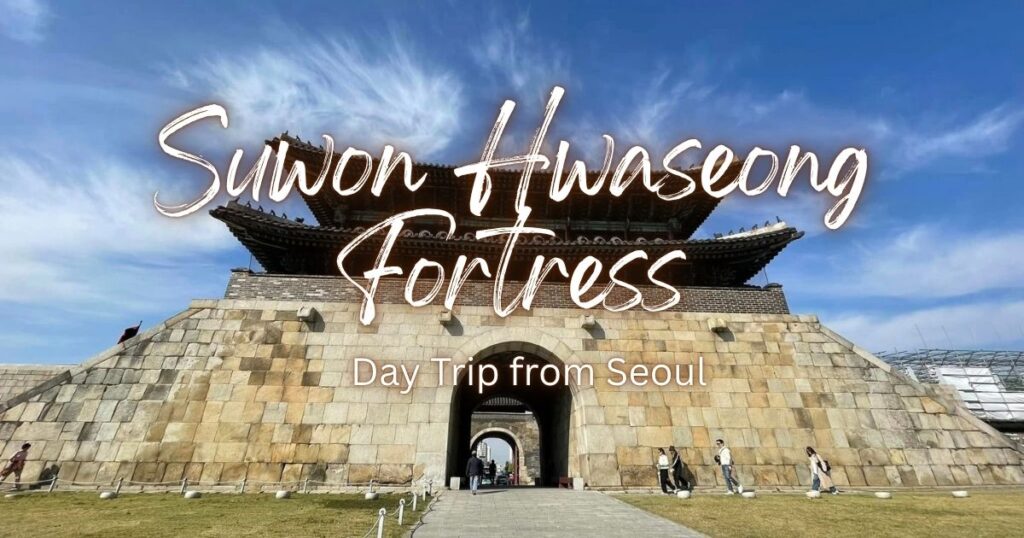

Some of the best days in Korea start with a simple question: what can I see without going too far from Seoul? For me, the answer was a Suwon Hwaseong Fortress day trip from Seoul, with centuries-old walls to wander in autumn.
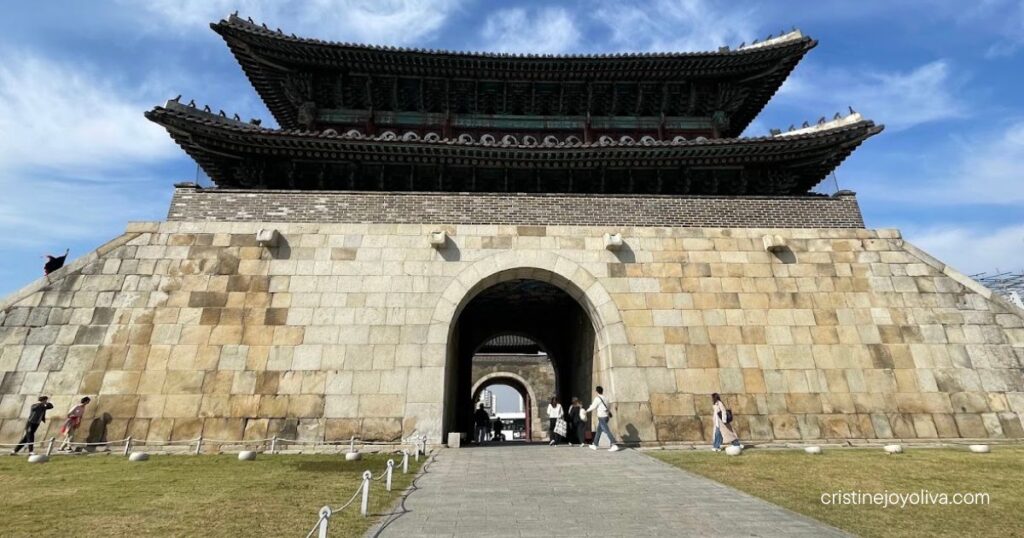
Whether you’re figuring out how to get to Suwon Hwaseong Fortress from Seoul, deciding what to see, or looking for tips as a first-time visitor, this guide walks you through my day so you can plan yours with confidence.
Looking for another autumn escape from the city? Read my Nami Island Day Trip from Seoul: An Autumn Escape.
Quick Facts: Suwon Hwaseong Fortress Day Trip
Suwon serves as the capital of Gyeonggi Province. It is most famous for the iconic Hwaseong Fortress, a UNESCO World Heritage Site built during the late 18th century under the reign of King Jeongjo. Here’s the quick rundown before I get into my day.
| Category | Details |
|---|---|
| Where | Suwon, about 30 km south of Seoul. Close enough that it doesn’t feel like you left the city for long. |
| Why it’s famous | UNESCO World Heritage Site since 1997, built in the late 1700s under King Jeongjo. |
| The wall | About 5.7 km all the way around, and you don’t have to walk all of it. |
| From Seoul | Train or Subway Line 1 to Suwon Station, then a local bus or taxi. About 30 minutes to an hour, depending on the train. |
| Where to start | Hwaseomun Gate is the easiest gate to reach from Suwon Station, so it’s a good first stop. |
| How long | Plan for 2-4 hours, depending on how much of the wall you walk. I spent 4 hours. |
| Best time to go | Autumn, which is when I went (November 2024). |
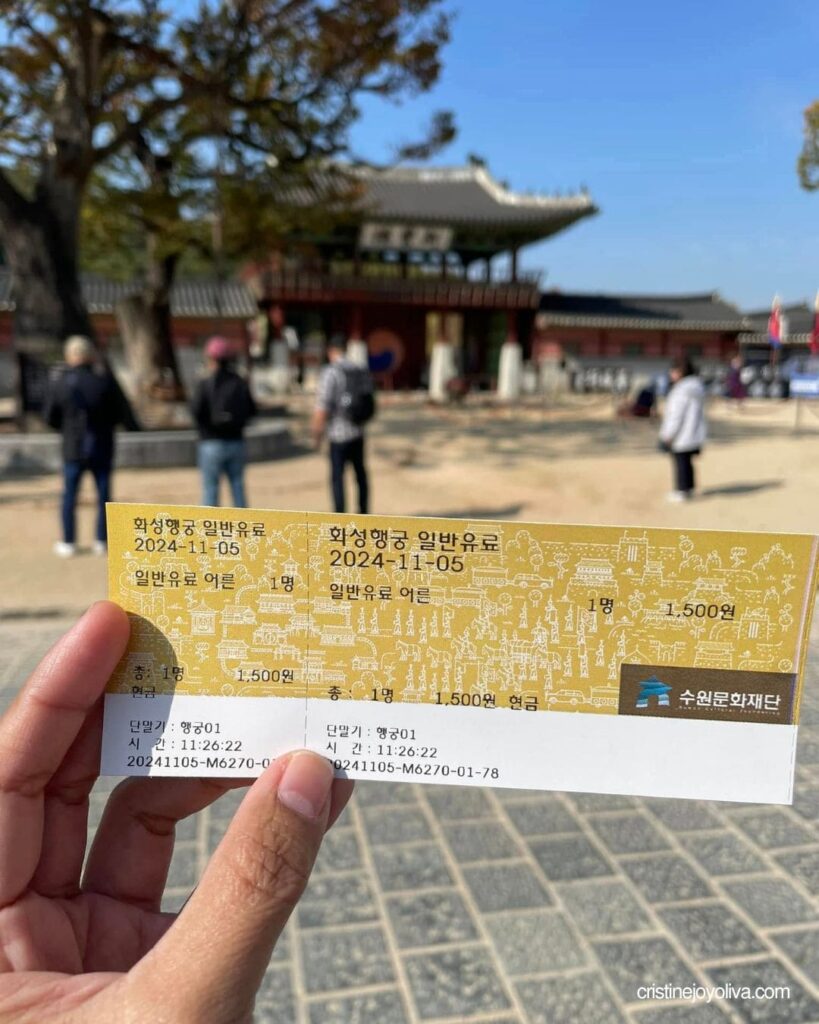
| Cost | ₩1,500 for Hwaseong Haenggung Palace (what I paid on November 2024) |
Note: Prices and opening hours change, so check the official Suwon Cultural Foundation website before you go.
Hwaseong Haenggung Palace in Autumn: What I Saw
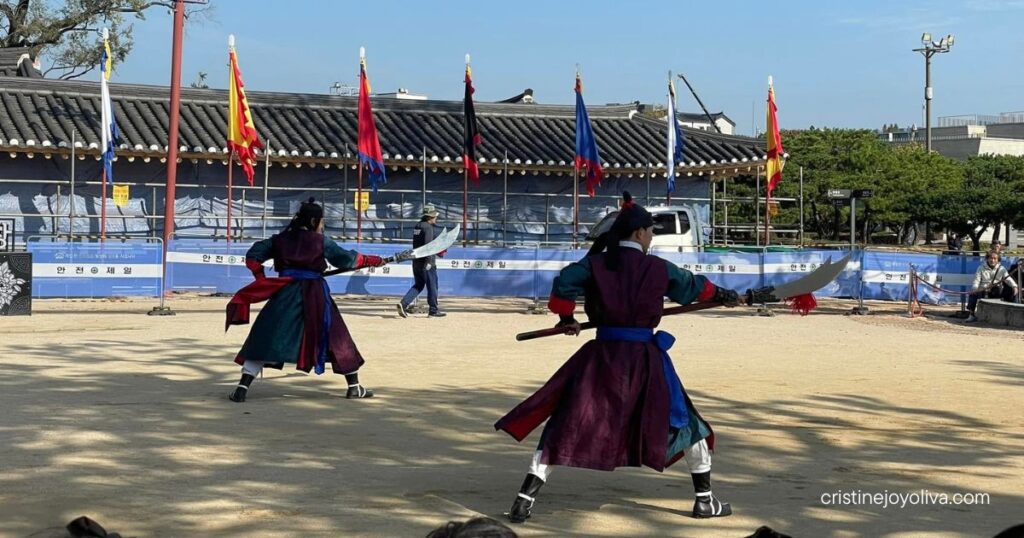
As I approached Hwaseong Haenggung Palace, I was greeted by excited schoolchildren gathering for the famous Muye24gi (무예24기) martial arts performance. Their energy added a lively touch to the historic surroundings. Muye24gi, or “24 martial arts,” is a traditional demonstration of the discipline, precision, and strength once associated with military training during the Joseon Dynasty.
After the performance, I headed to the admission office and paid ₩1,000 to enter Hwaseong Haenggung Palace. This temporary royal residence once hosted King Jeongjo during his visits to Suwon, particularly when he came to pay his respects to his father, Crown Prince Sado.
🎟️ Admission fee note. I paid ₩1,000 for Hwaseong Haenggung Palace in November 2024. Admission fees may change, so check the official Suwon Cultural Foundation website for current rates before your visit.
Walking through the palace grounds, I found myself imagining what life might have been like within these walls centuries ago. There was something quietly reflective about exploring a place so closely tied to Korea’s royal history. Beyond the buildings and courtyards, the palace offered a glimpse into the stories that shaped the city.
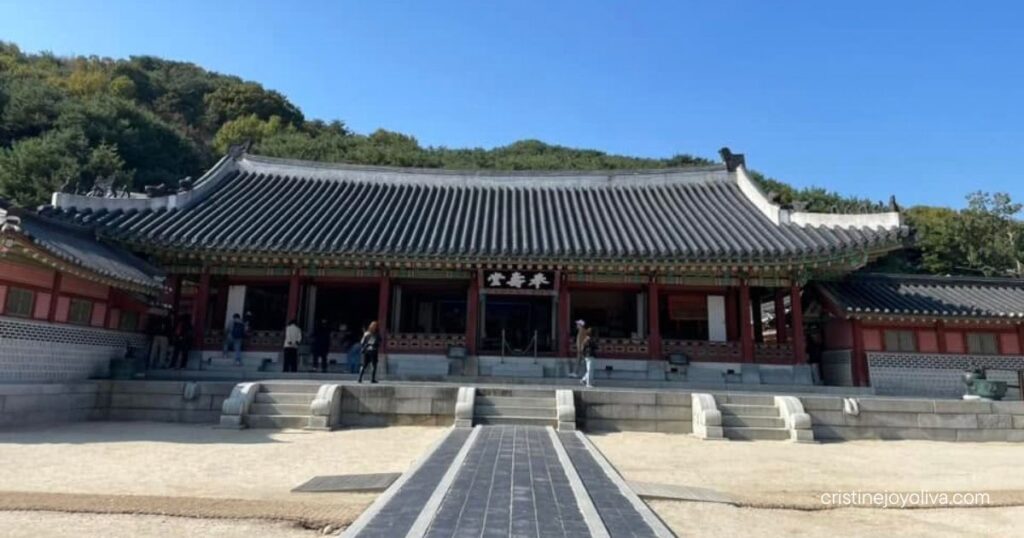
I also liked that the palace didn’t feel overly formal or difficult to explore. I could simply wander around, take photos, and imagine what these grounds might have looked like centuries ago.
How to Get to Suwon Hwaseong Fortress from Seoul
A Suwon day trip from Seoul is surprisingly easy to plan. Traveling from Seoul to Suwon is easy, affordable, and perfect for a day trip. I chose one of the most budget-friendly options: taking Seoul Subway Line 1. Since I wasn’t in a hurry, I wanted the journey to feel relaxed and unhurried. The train ride took about an hour, with the city gradually giving way to quieter neighborhoods and more open spaces.
When I got off at Suwon Station, I stopped by the Starbucks near the Novotel for a coffee. Something is grounding about a trip with coffee: the warmth in my hands, the quiet planning, and that little pause before the adventure begins.
- Route: From Seoul Station to Suwon Station
- Travel time: 1 hour
- Fare: Around ₩1,500–₩2,000
This is the option I personally took. Simple, straightforward, and perfect for solo travelers.
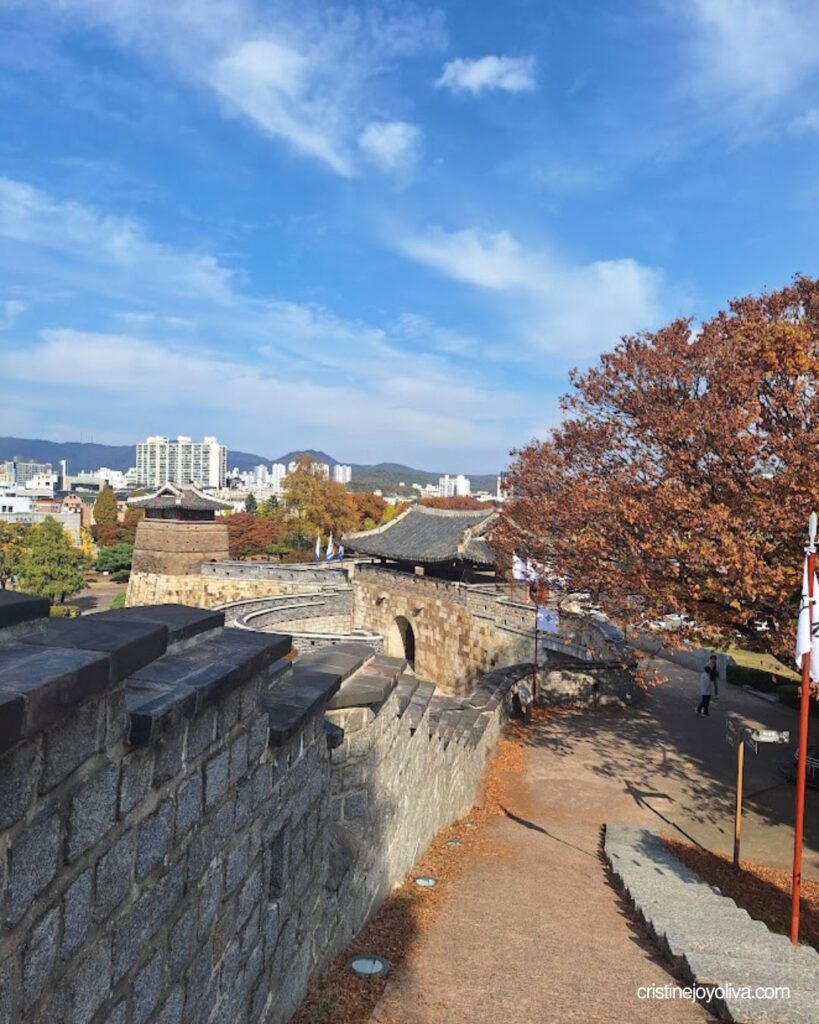
From Suwon Station, I waited for a bus to Paldalmun Gate, one of the main entrances to Suwon Hwaseong Fortress. Navigating Suwon’s bus system turned out to be… character-building. 😅 A lively group of seniors filled the bus with laughter and chatter, and instead of squeezing my way through, I decided to get off one stop early (near Hwaseong Haenggung Palace) and walk the rest of the way. Thankfully, it was only a short stroll.
Finding My Way to Suwon Hwaseong Fortress Walls
Armed with Naver Map and my stubborn sense of direction, I set off toward the fortress walls. Of course… I got a little lost. But sometimes, getting lost is part of the story. Each wrong turn led me through a quieter corner of Suwon, away from the busier streets and tourist crowds. I passed residential streets, small shops, and ordinary corners of the city that probably wouldn’t have made it onto my itinerary.
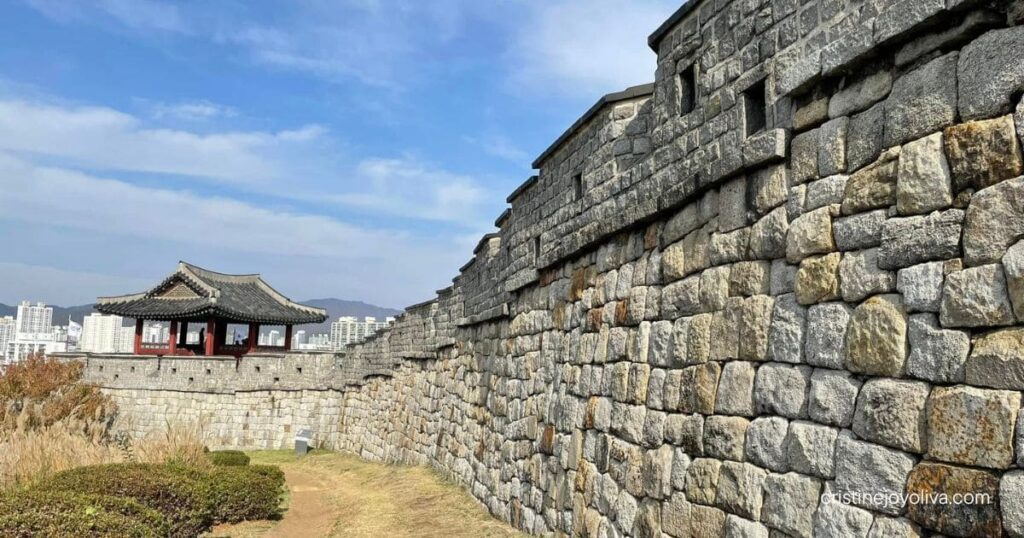
At first, I was slightly annoyed because I just wanted to find the fortress already. But after a while, I stopped worrying about being on the “right” path. I was enjoying the walk and seeing a different side of Suwon along the way.
Then, almost like a reward for all that wandering, the grand northern gate finally appeared. After all those wrong turns, seeing the fortress walls rise ahead of me felt strangely satisfying. I had finally found what I was looking for, and the walk there became part of the experience itself.
Janganmun Gate: The Grand Northern Entrance
And there it was. Janganmun Gate, the grand northern entrance of Suwon Hwaseong Fortress. After wandering through Suwon and taking a few wrong turns, finally seeing the massive gate in front of me felt like quite the arrival. It was much more imposing than I expected, with its traditional tiled roof, red wooden structure, and stone walls stretching out on either side.
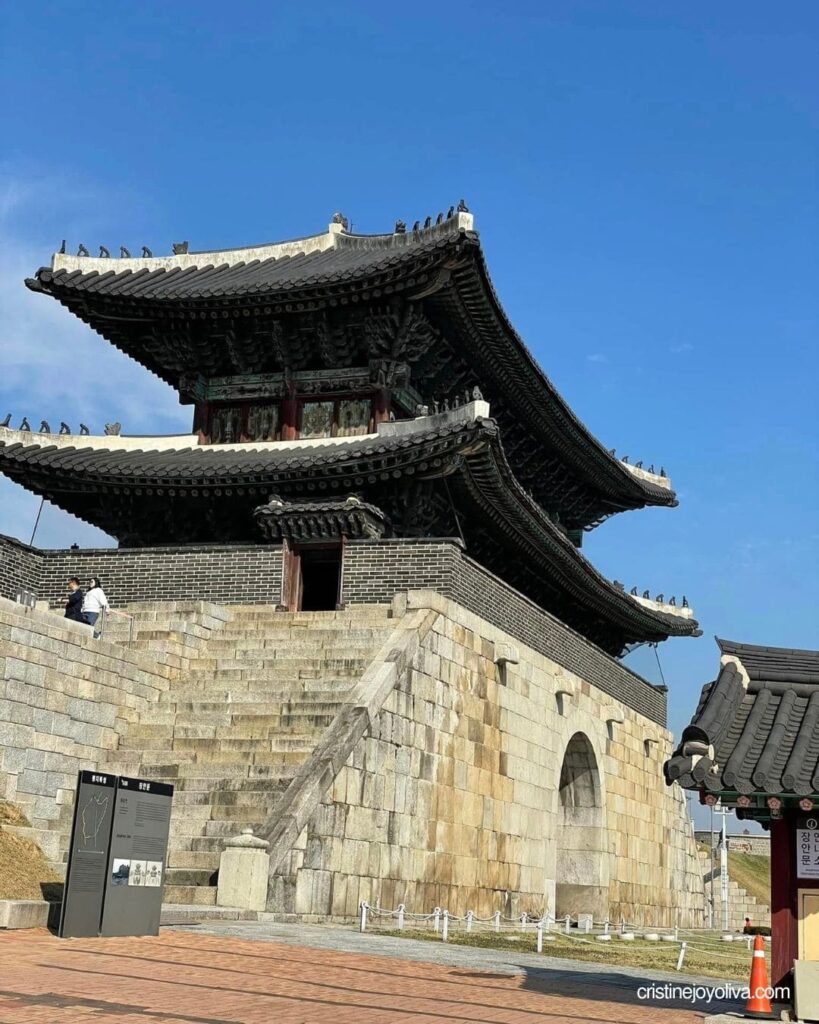
Janganmun is the largest of the four main gates of Suwon Hwaseong Fortress and served as an important northern entrance to the fortress. Standing in front of it, I could understand why it has become one of the most recognizable landmarks of Hwaseong.
I took a moment to admire the details before continuing along the fortress walls. After getting a little lost, I couldn’t have asked for a better first glimpse of the fortress.
Paldalmun Gate: A Gateway to All Directions
From Janganmun, I continued exploring Suwon Hwaseong Fortress until I eventually made my way toward Paldalmun Gate. Unlike the quieter fortress walls I had just walked along, this part of Suwon felt much more connected to the city around it. Paldalmun Gate stands in the middle of a busy intersection, surrounded by traffic, shops, and the everyday rhythm of Suwon. Seeing this historic gate standing proudly among the modern city was one of my favorite contrasts of the day.
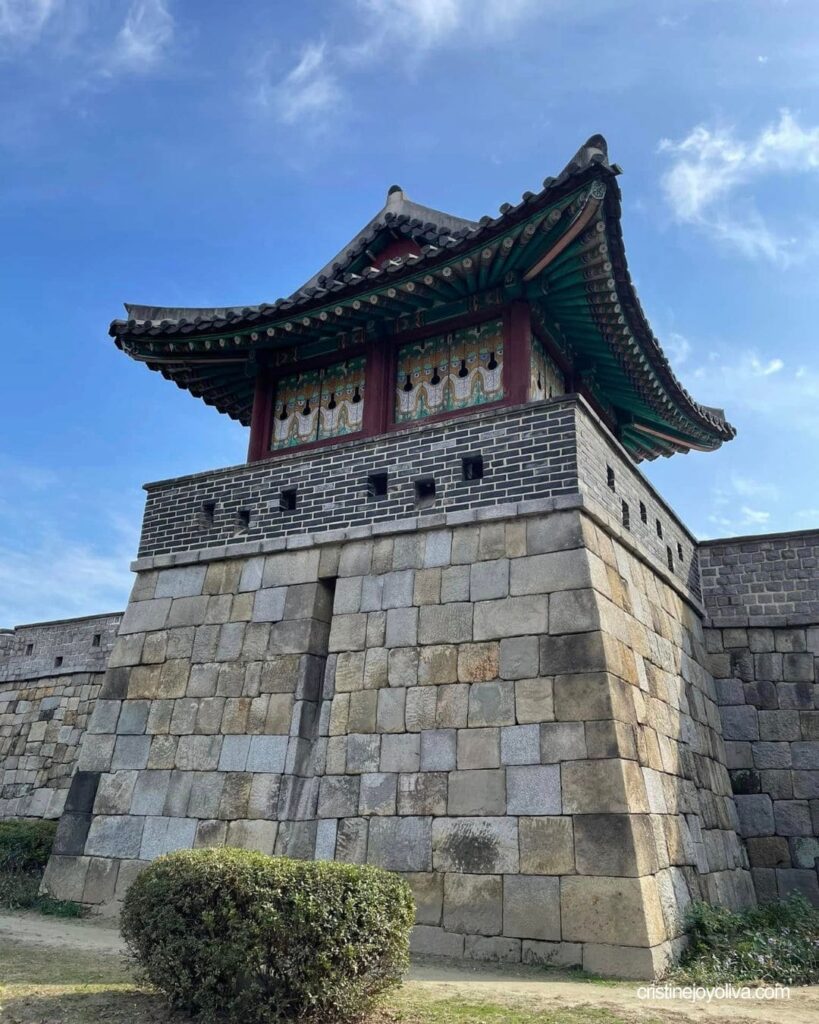
I stopped for a while to take in the view and appreciate how naturally the old and new coexist here. You can look at a Joseon-era fortress gate one moment, then turn around and find yourself surrounded by buses, cars, and busy streets.
🏯 Paldalmun Gate
Paldalmun is the southern gate of Suwon Hwaseong Fortress and one of its four main gates. Its name is associated with reaching in all directions, fitting for a historic gateway that has long served as an important passage through the city.
After spending most of the day walking through historic surroundings, Paldalmun reminded me that Suwon Hwaseong isn’t a preserved site sitting apart from the city. It is still very much part of everyday Suwon.
K-Dramas Filmed in Suwon
I visited Suwon in November 2024, but I didn’t get to explore Haenggung-dong or any of the city’s K-drama filming locations during that trip. I only discovered later that Suwon has been used as a filming location for several Korean dramas.
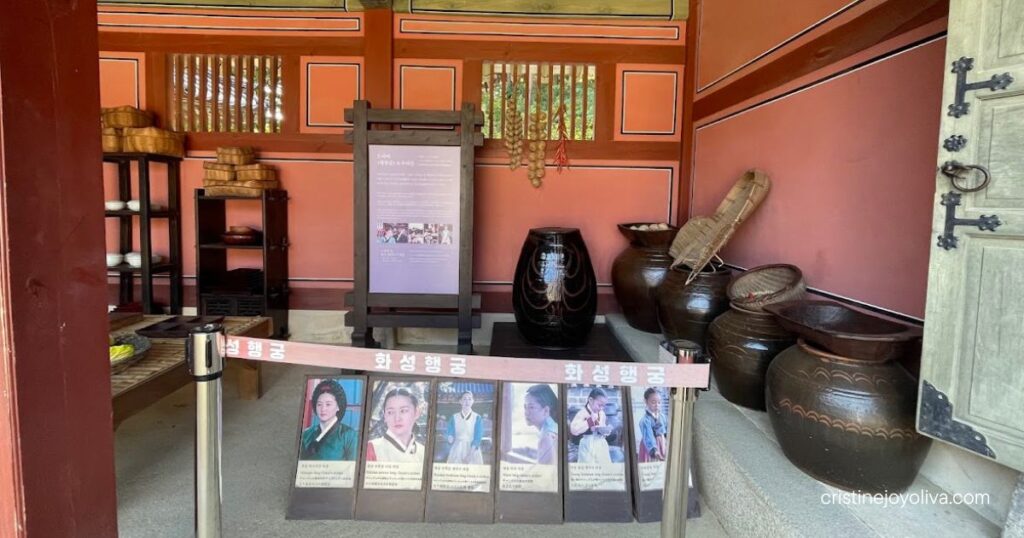
If you’re a K-drama fan, you might want to check out some of the K-dramas filmed in Suwon and add a few of their filming locations to your itinerary. Here are some you may recognize:
- 🌸 Lovely Runner: Haenggung-dong neighborhood and Hwahongmun Gate
- 🌿 Our Beloved Summer: Haenggung-dong neighborhood and Hwaseong Fortress
- 🏹 Twenty-Five, Twenty-One: Hwahongmun Gate
- 🍙 Extraordinary Attorney Woo: Haenggung-dong neighborhood
- 👑 Jewel in the Palace (Dae Jang Geum): Hwaseong Haenggung Palace
If I were doing my Suwon day trip again, I’d definitely add Haenggung-dong to the route. It’s close to Hwaseong Haenggung Palace and the fortress, so you can explore the neighborhood on the same day rather than make a separate trip.
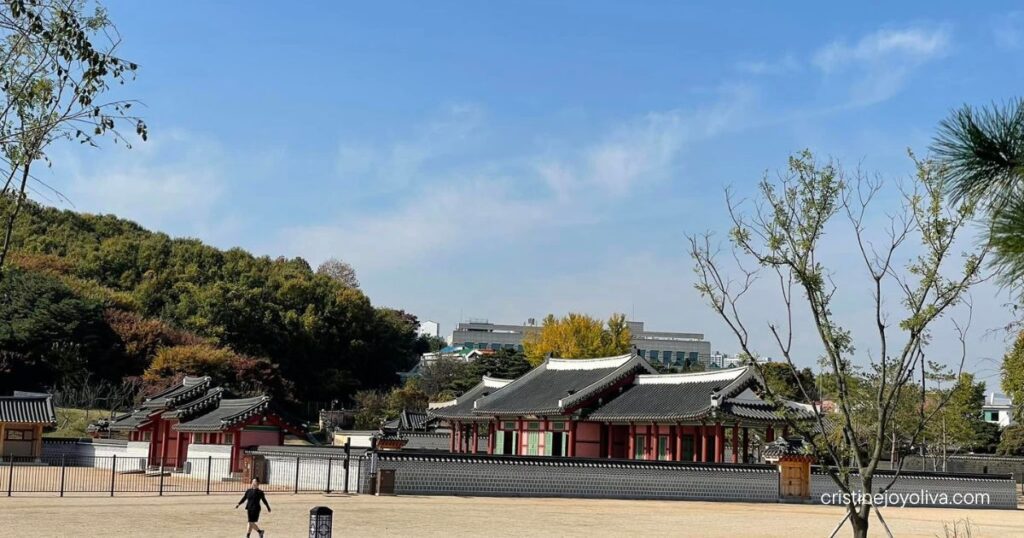
I didn’t get to see this side of Suwon during my visit, so I’ll have to save it for another trip. And honestly, that’s a pretty good reason to go back. 😊
What I’d Do Differently on a Suwon Day Trip
Looking back, there are a few little things I’d do differently if I visited Suwon again. My day turned out pretty well, but there were definitely a few moments when I thought, “Okay, I could have planned that better.”
🗺️ Plan the Fortress Route Better
I’d map out the fortress gates and walking route beforehand instead of relying entirely on Naver Map. I got a little lost after leaving the palace, and while it made for a good story, a better route plan would have saved me some wandering.
👟 Allow More Time for Walking
Suwon Hwaseong Fortress is much bigger than a quick photo stop. The fortress, palace, gates, and surrounding streets are spread out, so I’d give myself more time to walk, explore, and actually enjoy the journey between each stop.
🚌 Double-Check the Bus Route
My biggest lesson? Check the bus before getting on. I got off early on the way there because the bus was packed, then managed to take the wrong bus back to Suwon Station. Apparently, Suwon wanted to test my sense of direction twice.
🎬 Visit Haenggung-dong
For K-drama fans who love checking out filming locations, Haenggung-dong is worth adding to your Suwon itinerary. It’s close to Hwaseong Haenggung Palace and the fortress, so you can easily explore the neighborhood on the same day instead of making a separate trip.
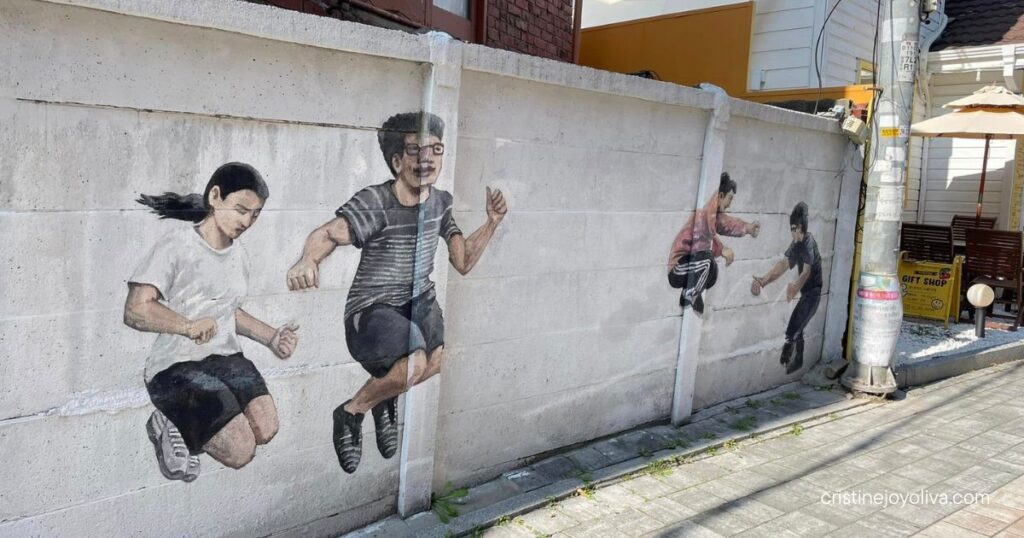
🎨 Look for the Murals
This one would be especially high on my list because I love finding murals when I travel. I didn’t get to explore Suwon’s mural areas during this trip, but I’d definitely look for them next time, especially around Haenggung-dong and the nearby mural village.
☕ Café-Hop Along Haengnidan Street
I didn’t get to explore Haengnidan Street during my visit, but after learning more about the area, I’d definitely make time for it next time. With its cafés, restaurants, and charming streets around Haenggung-dong, it sounds like a nice change of pace after walking around the fortress.
🍗 Eat at Suwon Chicken Street
I also missed Suwon Chicken Street, which feels like a pretty big omission considering how much walking I did that day. 😂 If I return, I’d love to stop by for some Korean fried chicken and experience one of Suwon’s well-known food spots.
🏛️ Visit Suwon Hwaseong Museum
After spending so much time exploring the fortress itself, I think visiting the Suwon Hwaseong Museum would have added more context to what I was seeing. Next time, I’d make time to learn more about the history behind the fortress instead of simply walking through it.
Looking back, I don’t think I had a bad itinerary at all. I simply didn’t realize how much more there was to see, eat, and explore around Suwon. And honestly, that’s not a bad reason to return. 😊
Back in Seoul City
After a full day of exploring Suwon, it was time to head back to Seoul. Of course, I managed to take the wrong bus to Suwon Station. Yes… it happened again. 😬 Even with Naver Map, I somehow ended up at the wrong stop. Thankfully, another bus came along, and I was soon back on track. Apparently, Suwon wasn’t quite finished testing my sense of direction.
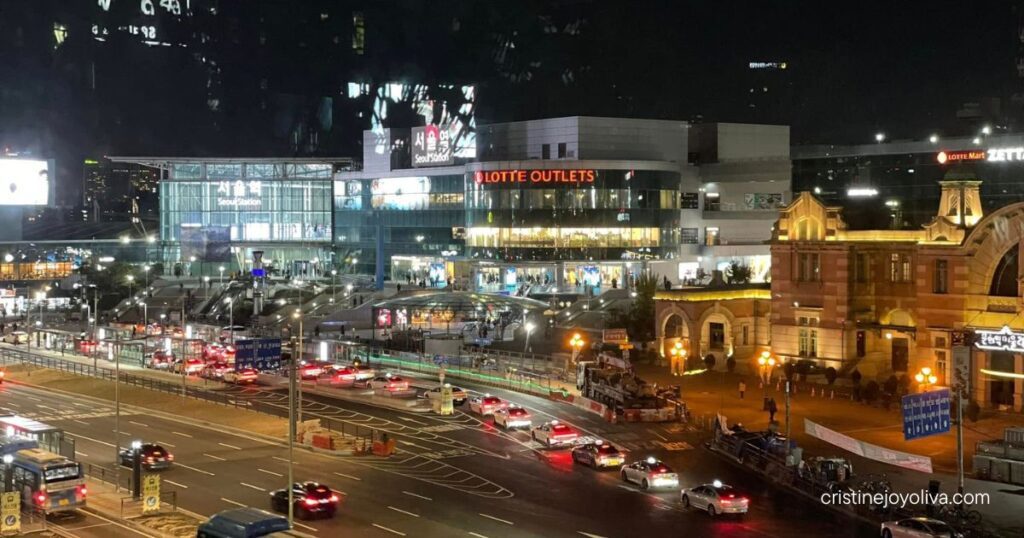
The train ride back to Seoul felt slower and quieter than the journey that morning. I watched the scenery pass by and found myself thinking about the day. From getting lost on the way to the fortress walls to wandering through historic gates and palace grounds, it had turned into one of those travel days that didn’t go exactly according to plan but somehow became more memorable because of it.
Back at Seoul Station, I grabbed dinner on the third floor, surrounded by glowing restaurant lights and the comforting smell of sizzling meals. After a long day of walking, a warm meal felt like exactly what I needed.
Later that evening, I returned to my guesthouse, only to find two lively Chinese-speaking roommates had arrived. Their energy quickly filled the room… loudly. 😬 I silently hoped for a little quiet, but I suppose travel teaches patience in the smallest moments too.
Why Suwon Should Be on Your Korea Itinerary
Suwon quickly became one of my favorite destinations in South Korea. What I liked most was how easily the old and new existed side by side. One moment, I was walking along the historic walls of Hwaseong Fortress, and the next, I was surrounded by busy streets, local restaurants, and neighborhood cafés. If you’re looking for an easy Suwon day trip from Seoul, this historic city makes a great addition to a Korea itinerary.
For me, Suwon stood out because of:
- A seamless blend of modern city life and historical charm
- The iconic Suwon Hwaseong Fortress
- Rich cultural experiences, including traditional martial arts performances
- Friendly locals and a lively food scene
- Plenty of local cafés to discover along the way
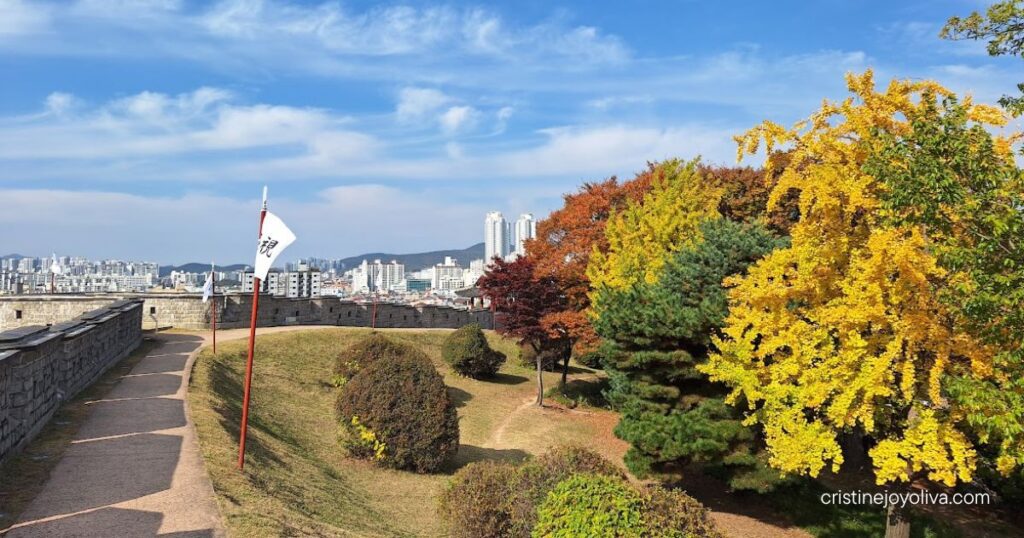
But beyond the sights, it was the experience of simply wandering around Suwon that stayed with me. I got lost, took the wrong bus, discovered quieter corners, and saw a side of Korea that felt different from the usual Seoul itinerary. It’s the kind of place that stays with you long after you leave. And for me, Suwon was definitely worth the trip from Seoul.
FAQs: Suwon Hwaseong Fortress Day Trip from Seoul
Is Suwon Hwaseong Fortress worth visiting from Seoul?
Yes. Suwon is an easy day trip from Seoul, and Suwon Hwaseong Fortress offers a nice mix of history, architecture, walking, and local city life. I especially enjoyed visiting in autumn when the changing leaves added another layer to the scenery.
How do I get to Suwon Hwaseong Fortress from Seoul?
The easiest option is to take Line 1 from Seoul Station to Suwon Station. From there, you can take a local bus or taxi toward the fortress area. I took a bus to Paldalmun Gate and walked from there.
How long do you need at Suwon Hwaseong Fortress?
Give yourself at least half a day if you want to explore at a relaxed pace. If you want to walk more of the fortress walls and visit Hwaseong Haenggung Palace, a full day gives you more breathing room.
Can I visit Suwon Hwaseong Fortress without a tour?
Absolutely. I visited independently and found it manageable as a solo traveler. You can reach Suwon by train or subway from Seoul and explore the fortress area at your own pace.
How much does it cost to visit Suwon Hwaseong Fortress?
The fortress grounds themselves can be explored without a general entrance fee, while some attractions within the area have separate admission fees. I paid ₩1,000 to enter Hwaseong Haenggung Palace in November 2024. Prices can change, so check current rates before your visit.
What is the best time to visit Suwon Hwaseong Fortress?
Suwon Hwaseong Fortress can be visited throughout the year, but I particularly enjoyed my November visit. The cooler weather made walking more comfortable, and the autumn foliage added beautiful colors to the historic surroundings.
Can I visit Suwon Hwaseong Fortress and Hwaseong Haenggung Palace on the same day?
Yes. In fact, combining the two makes sense because Hwaseong Haenggung Palace is located within the Suwon Hwaseong Fortress area. You can explore the palace before continuing your walk around the fortress.
Series Note: South Korea Trip 2024
Coming back to Korea felt like coming home, like reopening a familiar chapter with braver eyes. 🇰🇷✨
📅 Travel Dates: November 1-6, 2024
Planning your own day trip from Seoul?
Use my route and tips as a starting point, and leave room to wander the fortress at your own pace.