Macau is famous for its dazzling skyline and vibrant casino strip, but beyond the modern glitz lies a historic world shaped by centuries of Portuguese and Chinese heritage. If you are exploring East Asia, planning a Hong Kong to Macau day trip is one of the most rewarding ways to experience two distinct cultures in a single journey. While Macau is celebrated as the “Gambling Capital of Asia,” its true charm lies in its unique fusion of East and West.
In November 2017, Macau finally got crossed off my bucket list. I’d been dreaming of visiting ever since watching Princess Hour, one of the classic Korean dramas. Known as the “East meets West” of Asia, Macau is a melting pot of cultures thanks to its rich colonial history.
The Ultimate 1-Day Macau Itinerary: From Hong Kong to Colonial Charm
If you are visiting Macau as a day trip from Hong Kong, timing is everything. Here is the exact step-by-step route to make the most of your day, balancing world-class casino opulence with centuries-old Portuguese history.
       [Morning]               [Midday]               [Afternoon]
Hong Kong Ferry Terminal ➔ Cotai Strip Casinos ➔ Historic Senado Square
  (Sheung Wan MTR)        (Venetian / Parisian)     & Ruins of St. Paul
Morning: Crossing the Pearl River Delta to Cotai
1. Board the Cotai Water Jet to Taipa: Target departure: Between 8:00 AM and 8:30 AM. Our day started early at Sheung Wan MTR Station, heading straight for the Hong Kong-Macau Ferry Terminal. After validating our tickets and clearing Hong Kong outbound immigration, we boarded the vessel. The ferry ride across the Pearl River Delta takes roughly an hour. (Fair warning: the waters can get choppy. The ferry ride was rough—my stomach protested, though I was prepared with motion sickness medicine.) Upon arrival at Taipa Terminal, passing through Macau immigration was smooth and straightforward.
2. Catch a Free Casino Shuttle: Save on transport right from the terminal. Walk out to the shuttle bus terminal. Hop on the free Parisian or Venetian hotel shuttle. Macau’s major resorts offer free transportation, making it effortless to get from the ferry terminal straight to the Cotai Strip without spending a cent on taxis.
3. Explore the Parisian & Venetian: Photo ops & indoor Venetian canals.
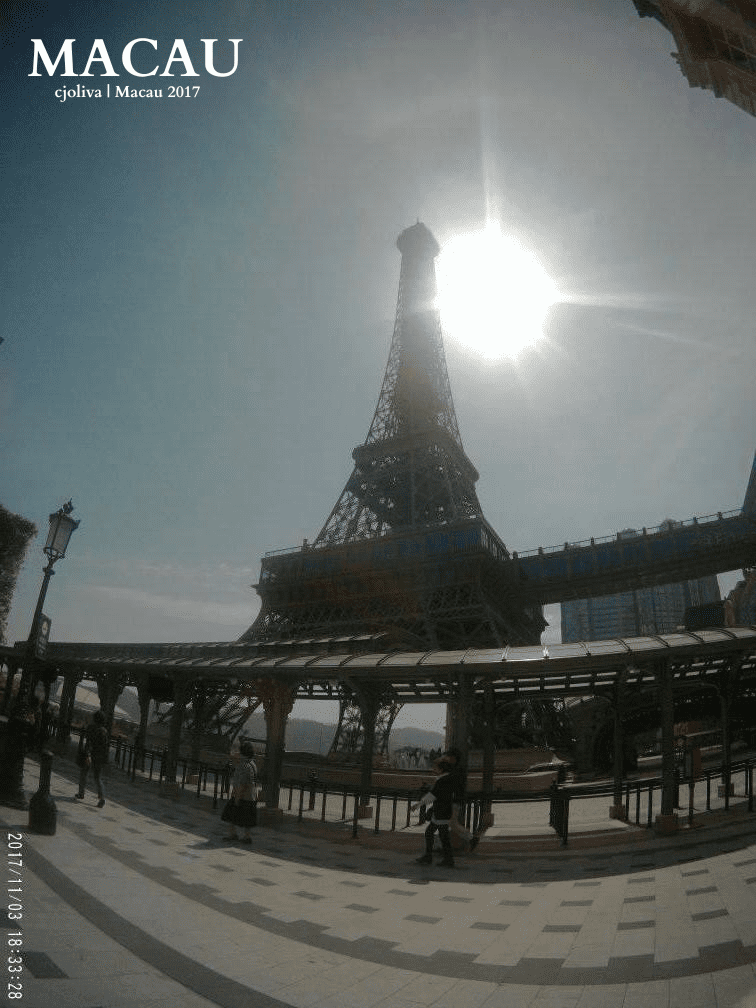
- The Parisian: Snap iconic photos under the half-scale replica of the Eiffel Tower. The Parisian Hotel is a world-class property offering luxurious accommodations, dining, and shopping experiences. Of course, we couldn’t leave without seeing the iconic Eiffel Tower replica, a photo opportunity not to be missed.
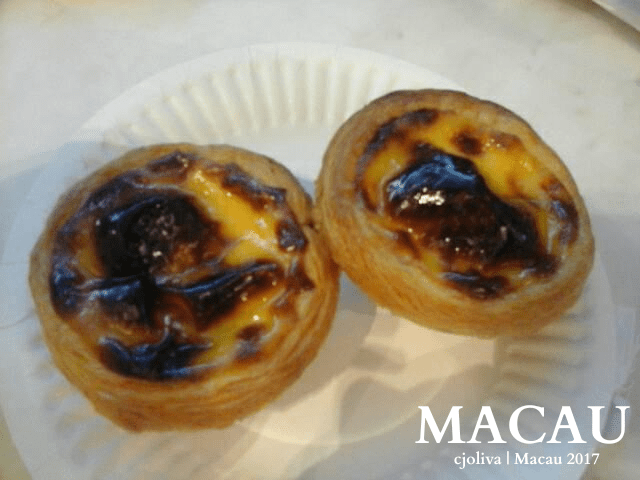
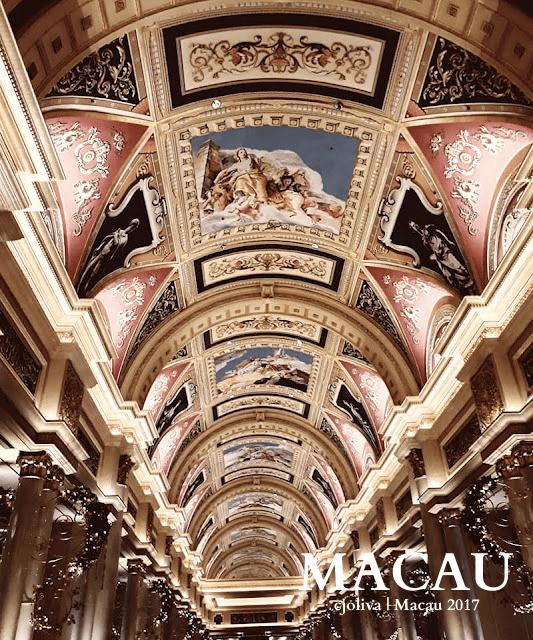
- The Venetian: Wander under the painted sky ceilings, watch the gondoliers navigate the indoor canals, and drop by Lord Stow’s Bakery inside the Grand Canal Shoppes for warm Portuguese egg tarts. We strolled through The Venetian Hotel & Casino, famous for its grand canals, gondolas, and elaborately painted ceilings. Most shops here were Western-branded, and after a bit of wandering, we stopped at Lord Stow’s Bakery for lemonade and their famous Portuguese egg tarts (MOP38). A sweet bite after a long morning of travel.
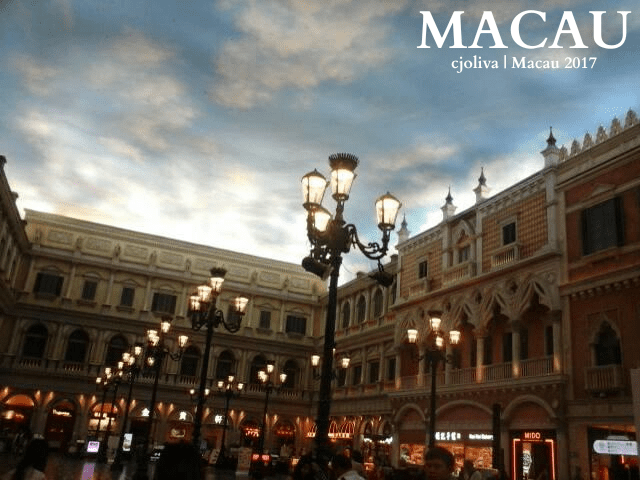
Macau felt a bit unusual that day. First, a guard asked for my passport at an escalator while ignoring my companion. Later, someone approached me asking if I was Malaysian and wanted to buy an iPhone. An odd experience, but I brushed it off and continued exploring.
Midday: Cotai to the Historic Centre of Macau
After exploring the casinos, it’s time to shift gears from modern luxury to 16th-century history. Instead of taking a free shuttle bus from The Venetian to Sands Macao on the Macau Peninsula, my friend suggested taking a taxi. From Sands Macao, Senado Square is just a brief bus ride or a pleasant 15-minute walk along the waterfront. Alternatively, public buses like the #26A or #33 run directly between Cotai and Senado Square for under MOP/HKD 6.
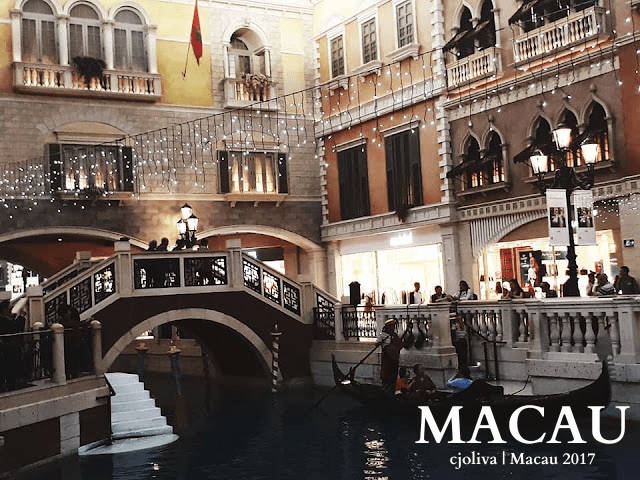
Afternoon: Cobblestones, Colonial Pastels & Historic Ruins
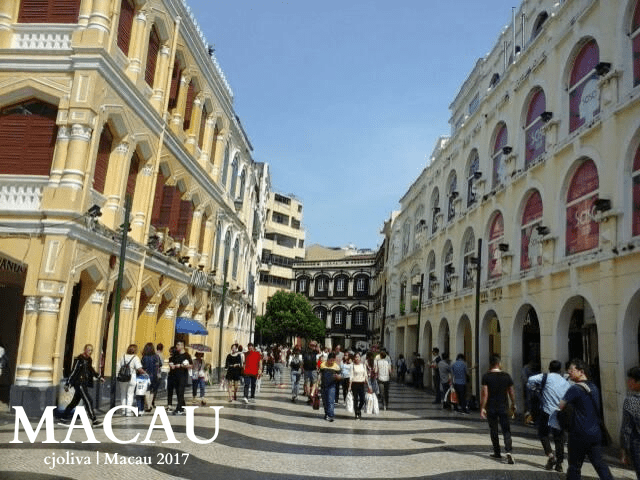
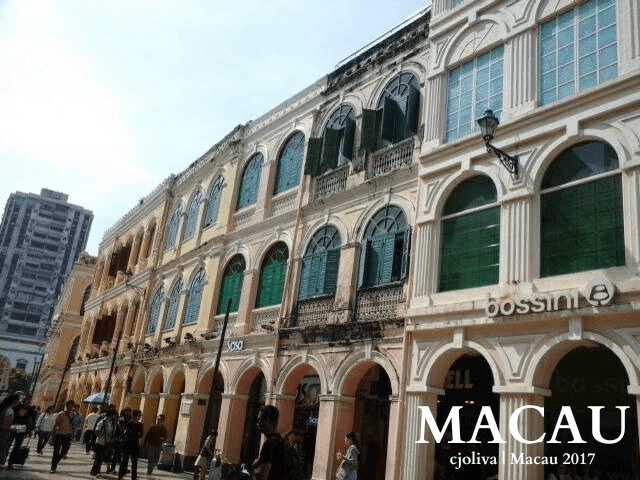
Stepping into Senado Square feels like stepping directly into Europe. The wave-patterned mosaic pavement (calçada portuguesa) and pastel-colored neoclassic buildings are a vibrant reminder of Macau’s Portuguese colonial past.
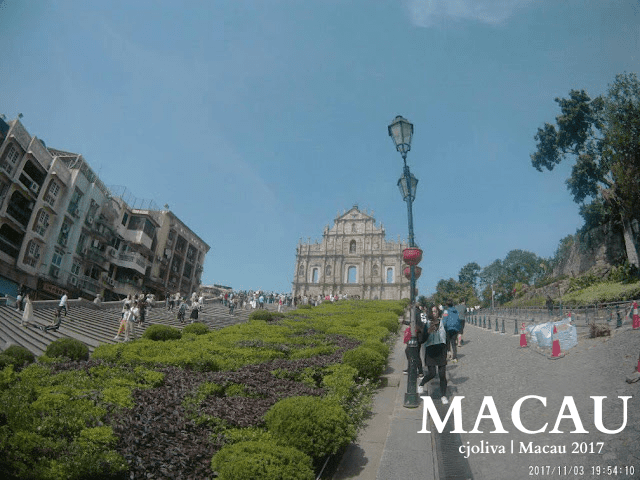
- 1:00 PM – Lunch & Senado Square: Stroll through the pedestrian plaza. Sample local street food along the alleys. Don’t miss a hot pork chop bun or fresh almond cakes from Choi Heong Yuen. At Senado Square, we explored shops and street vendors. One alley offered endless tastings of pork and beef jerky, cookies, and breads. Koi Kei Bakery (Pastelaria Koi Kei) is another must-visit stop for Macau’s famous snacks.
- 2:30 PM – St. Dominic’s Church & St. Paul’s Alley: Follow the pedestrian flow up the winding cobblestone shopping streets toward the city’s most famous landmark. One of the most impressive sites is Saint Dominic’s Church (Igreja de Sao Domingos), a century-old Baroque-style church established by Spanish Dominican priests in 1587. It sits in the heart of the Historic Center of Macau (Centro Historico de Macau), alongside other heritage landmarks, all showcasing the city’s colonial history.
- 3:30 PM – Ruins of St. Paul’s & Mount Fortress: Stand at the top of the grand stone staircase to marvel at the 17th-century stone facade of the Church of Mater Dei. Climb up to adjacent Mount Fortress (Monte Forte) for panoramic views of the historic ruins contrasting against the modern skyline.
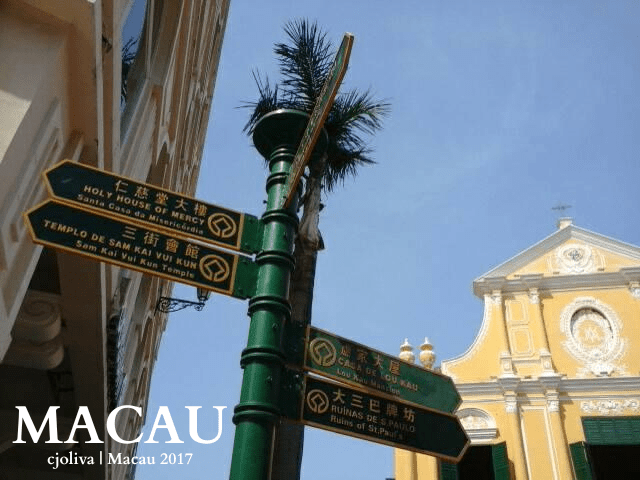
Late Afternoon & Evening: Sunset & Return to Hong Kong
- 5:30 PM – Golden Hour Walk: Walk down through St. Lazarus Quarter, a quieter neighborhood known for Portuguese-style villas, art spaces, and vintage cobblestone lanes.
- 7:00 PM – Head Back to Hong Kong: Take a local bus or free shuttle to the Outer Harbour Ferry Terminal (closest to the historic center) or Taipa Terminal to catch your return ferry.
We missed the bus to Senado Square (Largo do Senado), one of Macau’s main tourist hubs. We took a taxi instead (MOP89). This lively square is a true cultural melting pot, buzzing with people of all races, accents, and languages.
The Portuguese influence in Macau is everywhere—from Catholic churches to old colonial buildings and cobblestoned streets. It’s no wonder the city has at least 29 UNESCO World Heritage sites. Every corner reflects this East-West blend, making Macau a truly unique destination.
Since our visit was just a day tour, we also stopped at Grand Lisboa, one of Macau’s oldest casinos. After a quick visit, we waited for the free bus back to the Cotai Water Jet Taipa Terminal. The return ferry ride to Hong Kong was smooth. I felt a nostalgic twinge thinking about the time spent in Macau.
Reflections on Macau Travel
Macau is a city of contrasts: modern, glamorous casinos sit alongside centuries-old colonial buildings, while Portuguese and Chinese traditions coexist on cobblestoned streets. The city’s vibe is friendly, relaxed, and approachable—far from the overwhelming energy you might expect from a gambling capital.
I promised myself I’d return, this time to stay longer. I want to explore Taipa and Coloane villages, taste more Macau delicacies, ride public transport, see the historic centers, and enjoy the world’s largest water-based shows.
Back in Hong Kong: Sky100 Observation Deck
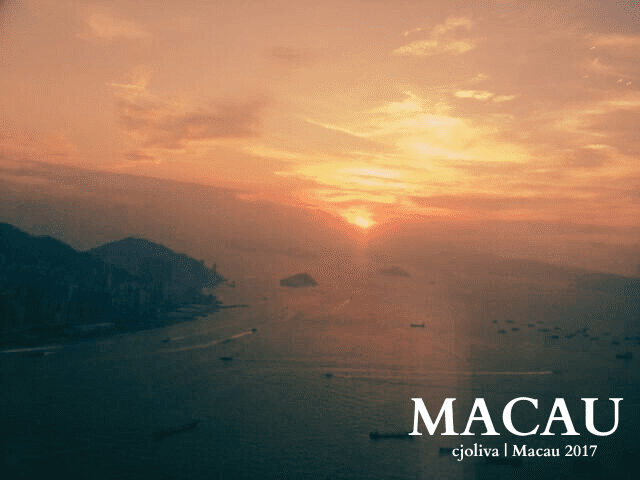
After clearing immigration and boarding the return ferry across the Pearl River, we made it safely back to Hong Kong. To wrap up the day, we headed straight for the Sky100 Hong Kong Observation Deck at the International Commerce Centre. Standing on the 100th floor with a 360-degree panoramic view of the glowing Victoria Harbour skyline was the ultimate way to cap off our whirlwind Macau day trip. It was a breathtaking preview of everything we explored in our Hong Kong Day 1 adventure.
Frequently Asked Questions: Macau Day Trip
Q: Can I use Hong Kong Dollars (HKD) in Macau?

A: Yes! Hong Kong Dollars (HKD) are accepted everywhere in Macau at a 1:1 exchange rate with the Macau Pataca (MOP). Keep in mind that vendors will often return your change in MOP, which cannot be spent back in Hong Kong.

Q: Is one day enough to explore Macau?

A: Yes. A 1-day trip is plenty of time to cover Macau’s main highlights, including the Cotai Strip casinos (The Venetian and Parisian) and the UNESCO Historic Centre (Senado Square and the Ruins of St. Paul).

Q: How do I get around Macau for free?

A: You can take advantage of the free hotel shuttle buses provided by major casino resorts (such as CotaiJet to The Venetian or Sands Macao to Senado Square). They connect the ferry terminals, airport, and major hotel properties at no cost.

Q: Do I need a visa to visit Macau from Hong Kong?

A: Most nationalities (including US, UK, EU, Australian, and Philippine passport holders) receive a free visa-on-arrival entry stamp valid for 30 to 90 days. Always carry your passport when crossing the border.
*** In November 2017, I went to Macau with friends. It was a beautiful experience exploring the historic sites and trying out the local cuisine. This blog post was pulled straight from my 2017 travel diaries, polished up with modern details and fresh insights.