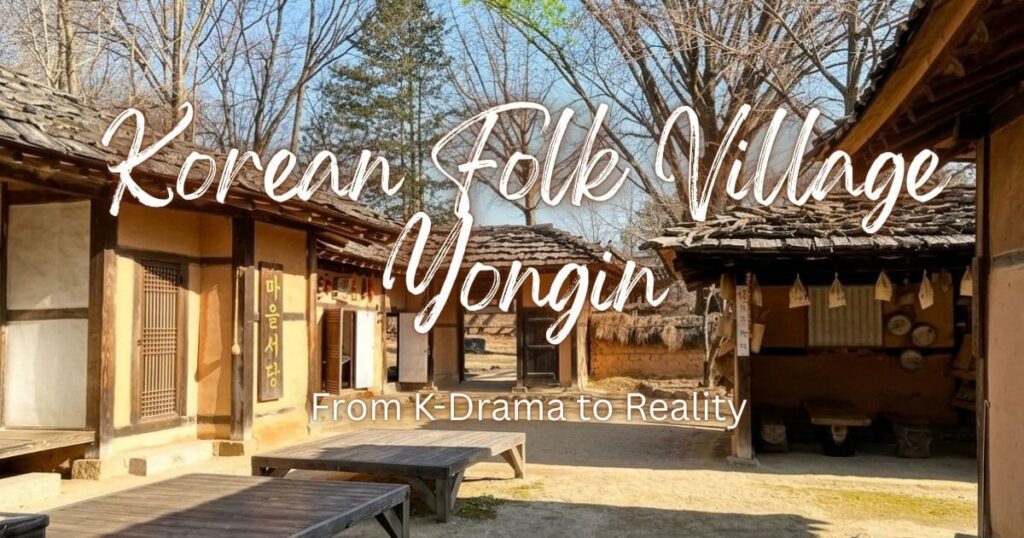

Following up on my Gapyeong Day Trip, Day 4 brought me to one of South Korea’s most iconic destinations: the Korean Folk Village Yongin. Hunting down real-life K-drama filming locations near Seoul has been on my bucket list for a while. This 240-acre open-air museum isn’t just a window into Joseon Dynasty history. It’s also the real-world backdrop for some of the biggest historical (sageuk) and fantasy series ever produced.
In this complete guide, I’ll cover the top filming spots inside the park, famous shows filmed on site, how to get there from Seoul, ticket prices, and practical tips to make the most of my Day 4 trip.
What Is the Korean Folk Village in Yongin
Located in Yongin, Gyeonggi Province (just an hour south of Seoul), the Korean Folk Village (Hankuk Minsokchon) is an expansive living museum dedicated to preserving late Joseon Dynasty culture. It doubles as a prime K-drama filming hub, with year-round cultural experiences that bring the past to life.
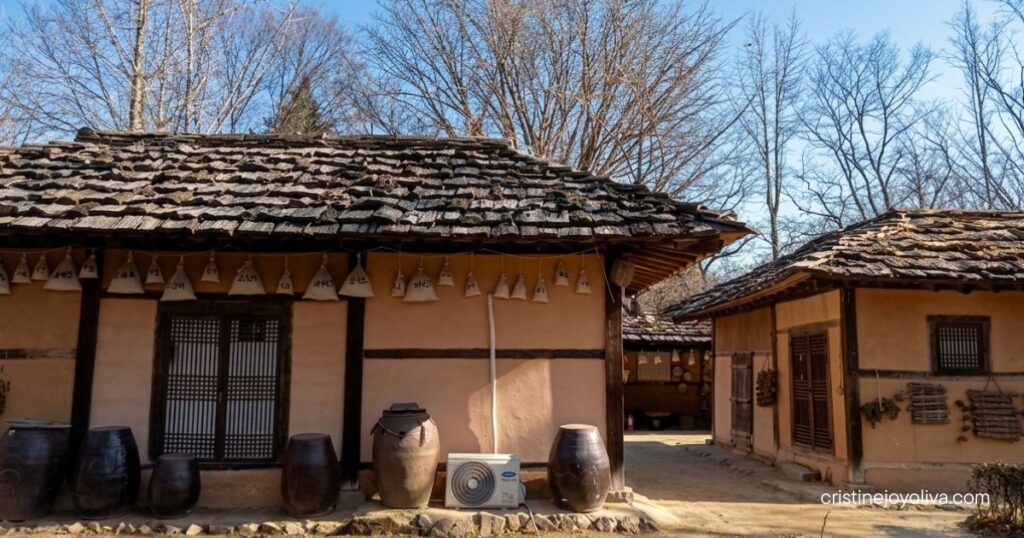
Opened in 1974, Korean Folk Village spans over 240 acres of scenic countryside. Unlike static museums with indoor display cases, the Korean Folk Village is a fully functioning replica of a Joseon-era community. It features over 260 authentic traditional houses (hanok) that were relocated from different regions across the Korean Peninsula and restored piece by piece.
K-Dramas Filmed at Yongin Korean Folk Village
Korean Folk Village is a go-to filming hub for production companies chasing that authentic Joseon-era backdrop. Below are some of the most famous shows shot here. Fair warning: if you’ve watched more than a couple of period dramas, you’ve probably already seen these exact corners dozens of times without realizing it. I definitely had.
Historical Classics (Sageuk)
- The Moon Embracing the Sun. The traditional marketplace and noble residences (yangban houses) show up for several key character encounters.
🎬 K-Drama Fan Pro-Tip: Keep an eye on the yangban houses and the central bridge as you walk through. If you’ve watched even a few sageuk dramas, there’s a good chance you’ll recognize a courtyard or walkway before you even remember which show it’s from.
- 100 Days My Prince. The rustic provincial homes and the Korean Folk Village common grounds set the stage for the leads’ everyday life scenes.
- Sungkyunkwan Scandal & Dae Jang Geum. Both leaned on the village’s streetscapes, historic kitchens, and government buildings for that lived-in period feel.
Fantasy & Time-Travel Series
- My Love from the Star. Do Min-joon’s Joseon-era flashbacks were filmed right along Korean Folk Village paths.
- Tale of the Nine-Tailed. The rustic folk setting shows up for the folklore-heavy scenes and historical flashbacks.
If Korean Folk Village has you hooked on tracking down real-life sageuk filming spots, Garden of Morning Calm is another one worth adding to your list; dramas like Love in the Moonlight, Red Sleeve, and The Scholar Who Walks the Night were all filmed there.
Top K-Drama Filming Spots Inside the Village
The village spans 240 acres, so I ended up with tired feet and missed locations on my first wander around. While the whole park feels atmospheric, a few specific spots kept giving me that “wait, I know this place” feeling.
Here are the main areas that stood out to me:
The Marketplace (Jangteo)
- The Vibe: Open-air stalls, dirt alleys, and traditional taverns.
- Where I Recognized It: The layout felt instantly familiar, the kind of bustling commoner street that shows up constantly in period dramas set in town centers.
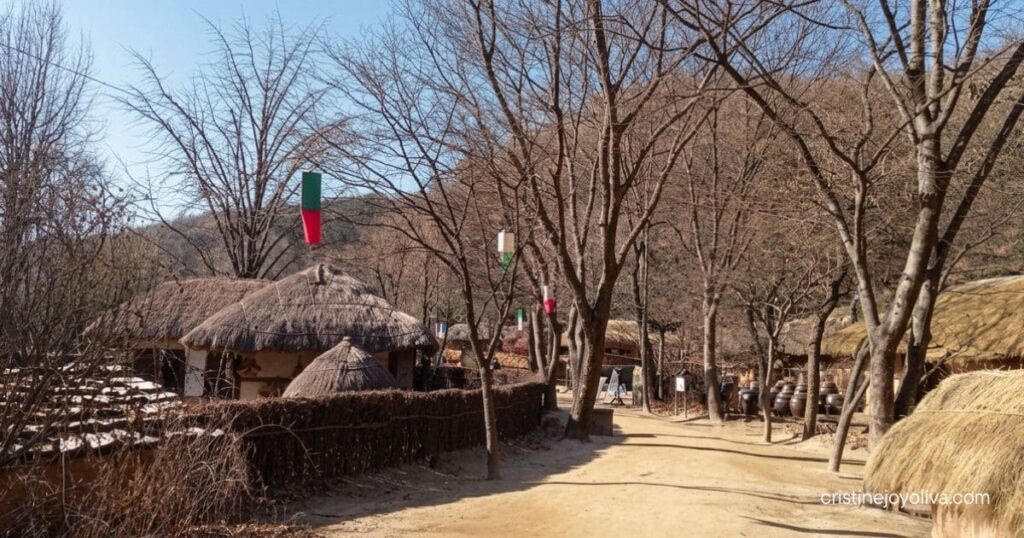
Noble Residences (Yangban Houses)
- The Vibe: High stone walls, tiled roofs, and quiet inner courtyards.
- Where I Recognized It: These courtyards had that unmistakable “secret late-night conversation” energy that so many sageuk dramas love to use for political scheming or quiet romance scenes.
The Wooden Bridge & Stream (Gokgyo)
- The Vibe: A narrow wooden bridge over a quiet stream, framed by drooping willow trees.
- Where I Recognized It: The moment I saw it, I knew I’d watched a slow-motion dramatic goodbye happen right here in something, even if I couldn’t place the exact title on the spot.
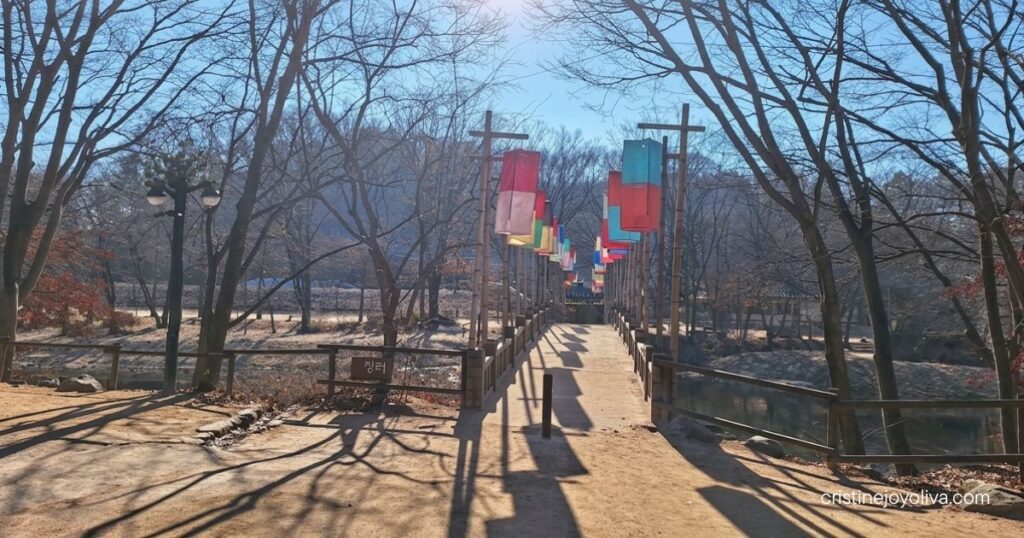
These sets do not have massive, glowing tourist signs marking them as filming locations; they are just part of the working village layout. Half the fun is that sudden “wait, I know this place” moment when a familiar wooden railing or stone pathway catches your eye while walking around.
Things to See and Do at Korean Folk Village
I came here expecting a quick walk through a few old filming locations. Instead, between tracking down familiar K-drama spots and getting distracted by the traditional performances, I ended up spending much more time here than planned.
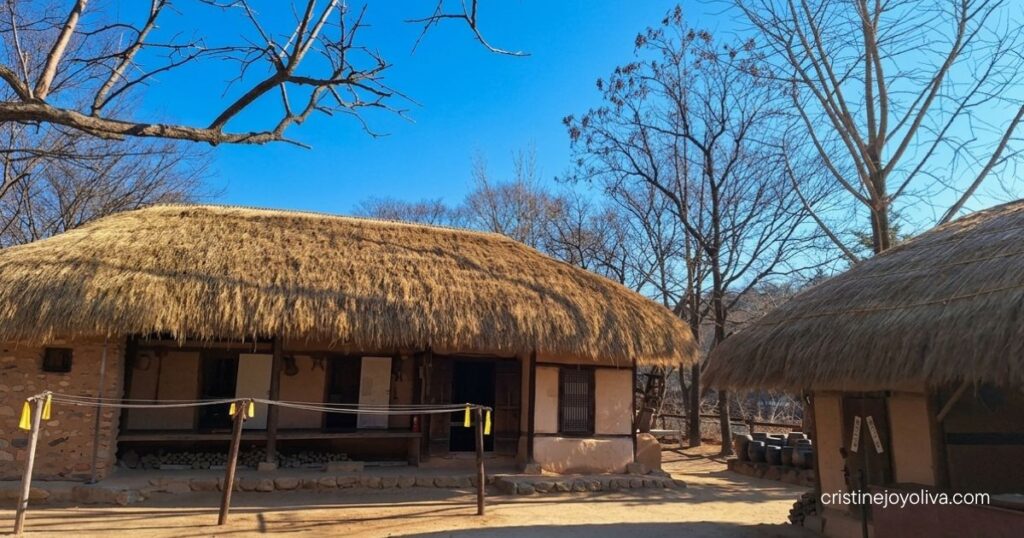
There is plenty to see beyond the filming locations, too. From Joseon-era houses and traditional performances to the Marketplace and its outdoor eating area, the village gives you plenty of reasons to slow down and look around.
Step Into Joseon-Era Architecture
Noble Residences (Yangban Houses): High-walled, tile-roofed homes built for the yangban, Korea’s traditional scholar-official class. Standing inside these courtyards, I could already imagine the dramatic K-drama conversations that probably happened here on screen.
Farmer & Commoner Houses: These humble, thatched-roof homes sit along the dirt paths and look straight out of a historical drama. I kept recognizing the kind of houses I’ve seen in various K-dramas, complete with traditional features such as wood-burning stoves and weaving looms.
The Marketplace (Jangteo): The central hub of the village, with wooden bridges, craft stalls, and traditional buildings surrounding the area. As I walked through, I couldn’t help but picture Won-deuk and Hong-shim from 100 Days My Prince bickering their way around town.
Catch the Live Performances
The traditional performances were another part of the village experience. I only managed to catch one during my visit, and it turned out to be a highlight of the day.
- Farmer’s Music and Dance (Nongak): The traditional folk drumming is already energetic, but watching the dancers spin those long white sangmo ribbons overhead makes it even more fun to watch up close.
- Equestrian Martial Arts (Masang Muye): I didn’t get to see this performance during my visit, but it’s one to look out for if you’re planning your day around the shows. Skilled riders perform horseback archery, swordplay, and acrobatic stunts while riding at full speed.
- Tightrope Walking (Jultagi): I also missed this one during my visit. The performance combines impressive balancing skills with comedy and interaction with the audience, making it quite different from the other traditional shows.
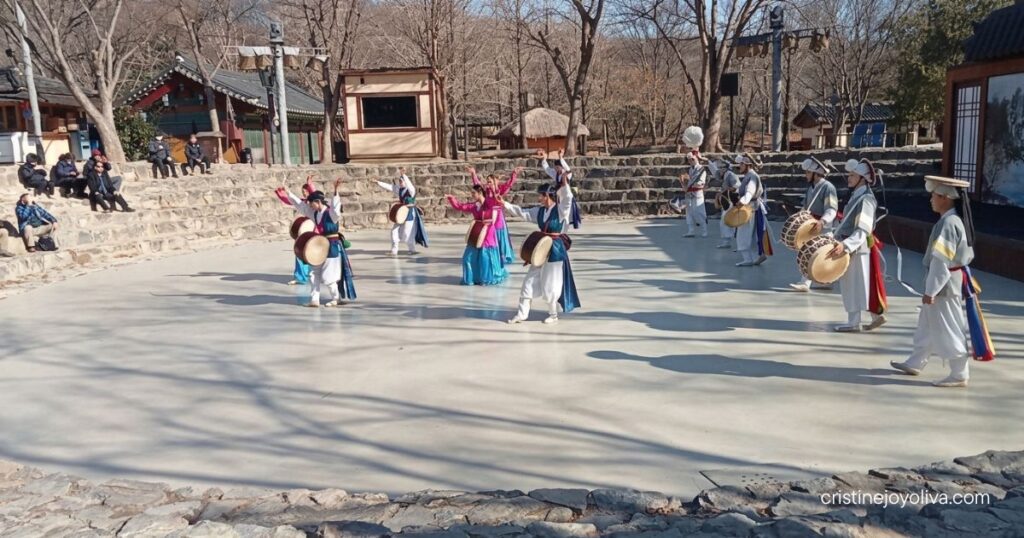
💡 Practical Show Tip: Check the daily schedule board near the main entrance as soon as you arrive. The performances run at set times, so it’s worth planning your route around them instead of discovering later that you just missed one.
Explore Folk Crafts & Traditional Games
I didn’t get to try the hands-on activities myself, but I noticed traditional crafts and games while walking around the village.
Craft Workshops: Some traditional activities are set up inside or around the village houses. Depending on what’s available during your visit, you may come across activities such as pottery-making, Hanji paper crafts, or wooden stamp carving.
Folk Games (Minsok Nori): I also spotted traditional games being played in the open courtyard areas, including Yutnori and Tuho. I didn’t join in, but they looked like a fun way to take a break from sightseeing and experience a different side of the village.
Take a Break at the Marketplace
After all that walking, I stopped at the outdoor eating area in the Marketplace and had a bowl of janggukbap, a traditional Korean soup with rice. It was a simple but satisfying meal, especially after spending hours walking around the village.
💡 Marketplace Food Tip: Don’t go straight to the food stall when you’re ready to order. There’s an outdoor food-ordering kiosk where you select your dish and place your order first. I paid with my debit card, and a staff member nearby pointed me toward the stall where I could pick up my janggukbap.
What I liked about the Marketplace was that the outdoor eating area felt like part of the village itself rather than just a place to stop for lunch. After hours of walking around and hunting for K-drama filming spots, sitting down with a warm bowl of janggukbap gave me a chance to slow down and enjoy the atmosphere.
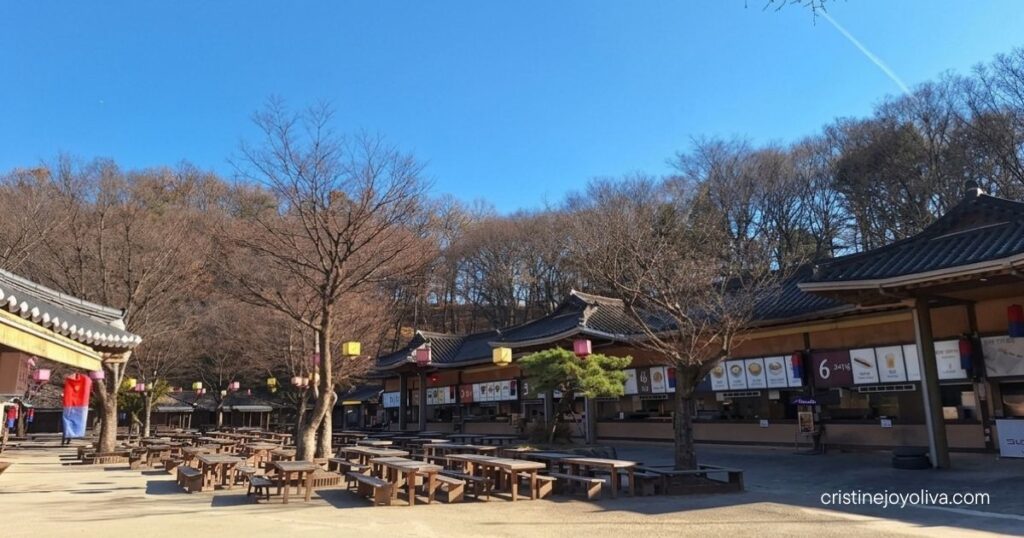
I came looking for familiar K-drama locations, but the village itself ended up being just as interesting. Between the architecture, the performance I caught, the traditional details along the paths, and even a simple meal at the Marketplace, there was much more to experience once I stopped treating the visit like a filming-location checklist.
Visiting Korean Folk Village from Seoul: How I Made It
Getting from central Seoul to Korean Folk Village takes roughly 60 to 90 minutes, depending on your route. Sounds easy, right? Well, my trip involved a transfer, a discontinued shuttle, a long bus ride, and a little bit of basic Korean. I definitely learned a few things the hard way.
If you’re navigating Seoul solo for the first time like I was, my Seoul Winter Solo Female Travel Guide covers more general tips for getting around the city safely and confidently.
My Route from Seoul
I visited Korean Folk Village in December 2023, starting from Hoehyeon Station on Line 4. I rode to Geumjeong Station, then transferred to Line 1 toward Suwon.
At Suwon Station, I walked toward the Tourist Information Center near Novotel Ambassador Suwon. I’d read there was a shuttle bus from this area that went directly to Korean Folk Village, so that’s what I was looking for. Except there wasn’t one anymore.
The staff told me the shuttle’s last operation had been in September 2023. Thankfully, she gave me two alternative bus numbers: 37 and 10-5. I took Bus 10-5 from the stop in front of Novotel Ambassador Suwon. And yes, it was a long ride from Suwon. I know. 😂
But honestly, there was something fun about it. I felt like a K-drama star riding a local bus through Korea, and it gave me a chance to put my very basic Korean to use. The bus didn’t have English voice announcements, but recognizing the next-stop announcement helped me figure out when to get off.
And, of course, Naver Map was my trusty sidekick.
💡 My Practical Tip: If you’re following an older blog or travel guide that mentions a direct shuttle from Suwon Station, check the information before your trip. The shuttle I had read about had already stopped operating by the time I visited in December 2023.
Other Ways to Get to Korean Folk Village
If you don’t want to follow my slightly complicated route, there are other ways to reach Korean Folk Village from Seoul.
- Option A: Via Gangnam Station
Take Seoul Subway Line 2 to Gangnam Station, then transfer to a bus that goes toward the Korean Folk Village area. - Option B: Via Sanggal Station
Take the Suin-Bundang Line to Sanggal Station, then continue by local bus toward the village. - Direct Shuttle or Day Tour
If you’d rather skip the public-bus navigation altogether, you can also look into a day tour or transportation package from Seoul. Some tours combine Korean Folk Village with nearby attractions, which can make sense if you’re trying to fit several places into one day.
Korean Folk Village Ticket Prices & Opening Hours
Since my visit was in December 2023, the admission price I paid shouldn’t be treated as the current rate. Check the official Korean Folk Village website for the latest ticket prices and opening hours before your trip.
When I stopped by the Suwon Station Tourist Information Center, the lady there kindly handed me a booklet that included a discount coupon for Korean Folk Village. She told me to present the coupon at the admission office.
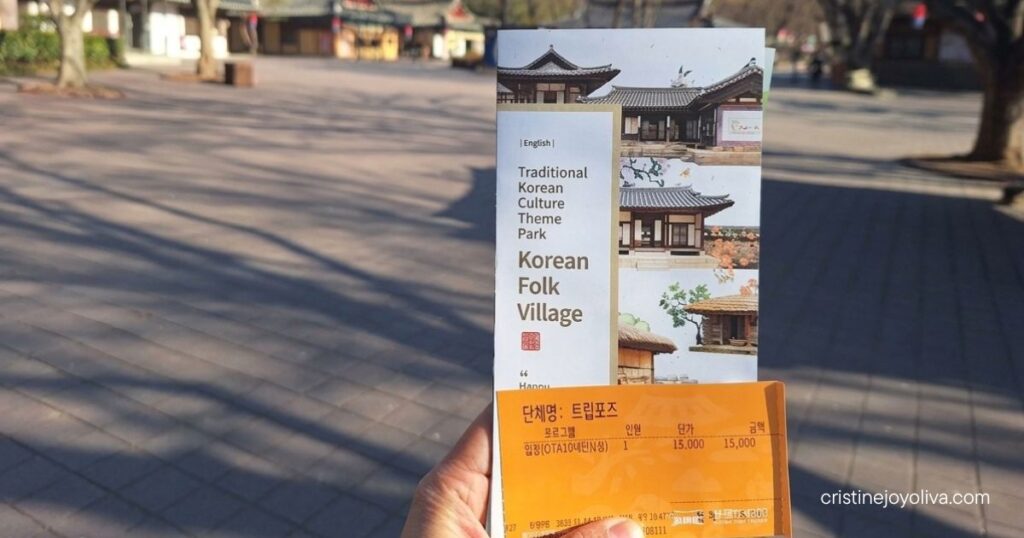
I used the coupon when I arrived and paid only ₩15,000 for my admission. The booklet itself didn’t list ticket prices, and I don’t know if the same coupon is still available today. But if you’re passing through Suwon Station, it may be worth asking the Suwon Station Tourist Information Center if they have any current discounts or visitor offers.
Practical Tips for K-Drama Fans
1. Don’t expect every filming location to be marked.
Korean Folk Village is a functioning attraction, not a filming-location museum. Many drama locations are simply part of the village, so look for familiar courtyards, wooden bridges, stone paths, marketplaces, and traditional houses.
2. Save screenshots before you go.
If you have a specific drama scene in mind, save a few screenshots on your phone. It makes it much easier to recognize a location when you see it in person, especially when the same area has appeared in multiple dramas.
3. Watch for locations that appear in multiple dramas.
One courtyard or street can look completely different depending on the camera angle, costumes, and editing. You might recognize a place from one drama and later realize you’ve seen the same spot somewhere else.
4. Give yourself more time than you think you’ll need.
If you’re there specifically for K-drama locations, don’t treat the village like a quick photo stop. The grounds are large, and you’ll probably get distracted by the architecture, performances, and random “wait… I’ve seen this before!” moments.
5. Don’t forget the non-filming-location parts.
This one is especially important for K-drama fans. Once you finish hunting for familiar scenes, take time to explore the actual village. The traditional houses, marketplace, performances, and everyday details are what make the setting feel different from simply watching it on screen.
6. Bring comfortable shoes.
This sounds boring compared with finding your favorite oppa’s filming spot, but you’ll be doing plenty of walking. I learned this one the practical way. 😂
FAQs: Korean Folk Village in Yongin
What dramas were filmed at Korean Folk Village Yongin?
Korean Folk Village has hosted a long list of productions over the years, including The Moon Embracing the Sun, 100 Days My Prince, Sungkyunkwan Scandal, Dae Jang Geum, My Love from the Star, and Tale of the Nine-Tailed. Its open-air hanok village and marketplace make it a go-to backdrop for both historical sageuk dramas and fantasy time-travel series.
Is Korean Folk Village K-drama filming still active today?
Yes. Because the village is a functioning attraction with authentic period architecture, production companies continue to use it for new sageuk and fantasy dramas. Locations aren’t marked for tourists, so recognizing a spot usually comes down to remembering it from a show rather than following signage.
Which specific spots inside the village are known for K-drama filming?
The Marketplace (Jangteo), the Noble Residences (Yangban Houses), and the wooden bridge and stream area are the spots most likely to feel familiar if you’ve watched a few historical dramas, since these areas show up repeatedly across different productions.
Are there other K-drama filming locations near Seoul besides Korean Folk Village?
Yes. Petite France is where My Love from the Star‘s present-day scenes were filmed, making it a natural follow-up if you want to see both timelines of the same drama in real life.
Do I need to know which dramas were filmed at Korean Folk Village Yongin before I visit?
Not necessarily, but it helps. Saving a few screenshots of scenes you remember makes it easier to recognize the exact spot in person, especially since many locations across different dramas look similar at first glance.
Is Korean Folk Village worth visiting if I’m not a K-drama fan?
Yes. Beyond the filming locations, the village offers traditional architecture, live performances like nongak and equestrian martial arts, hands-on crafts, and local food at the Marketplace, all worth experiencing on their own.
Is Korean Folk Village Worth Visiting?
If you’re a fan of historical K-dramas, I’d say Korean Folk Village is worth adding to your Seoul itinerary. Walking through the same kind of traditional houses, marketplaces, bridges, and courtyards I’ve seen on screen made the dramas I love feel a little more real.
If you’re willing to spend most of a day exploring other filming locations within Seoul (not just sageuk), N Seoul Tower is one of the best places to go. A few K-dramas filmed here are True Beauty, School 2015, Boys Over Flowers, Oh My Ghostess, Legend of the Blue Sea, Terius Behind Me, and Hwayugi.
I wrapped up 2023 with an adventure to the land of K-Pop, a journey that felt like a dream, yet came with its own moments of truth. A few unexpected mishaps added some spice to the trip, but in the end, I was simply grateful to finally tick South Korea off my bucket list. Sometimes the places that once inspired our dreams are the same places that remind us how far we’ve come.
📅 Travel Dates: Dec 1–5, 2023
Which K-drama location would you love to see in real life?
Tell me in the comments! And if Korean Folk Village Yongin is on your South Korea itinerary, save this guide for later so you can plan your visit.
Up next: Last Day in Seoul Itinerary: Namsan to Incheon
A quick morning visit to Deoksugung Palace, taking the airport limousine bus to Incheon, and wrapping up my solo winter trip before flying back to Manila.