On the Alishan train from Fenqihu the other day, a place quietly caught my attention: Hinoki Village, Chiayi, Taiwan. At the time, I didn’t know much about it, only that it looked authentic and intriguing.
Later, while riding a bus bound for Chiayi Station, I noticed on Google Maps that the village was nearby. Hunger nudged me, curiosity pulled me, and I decided to make a quick stop before continuing to my next destination.
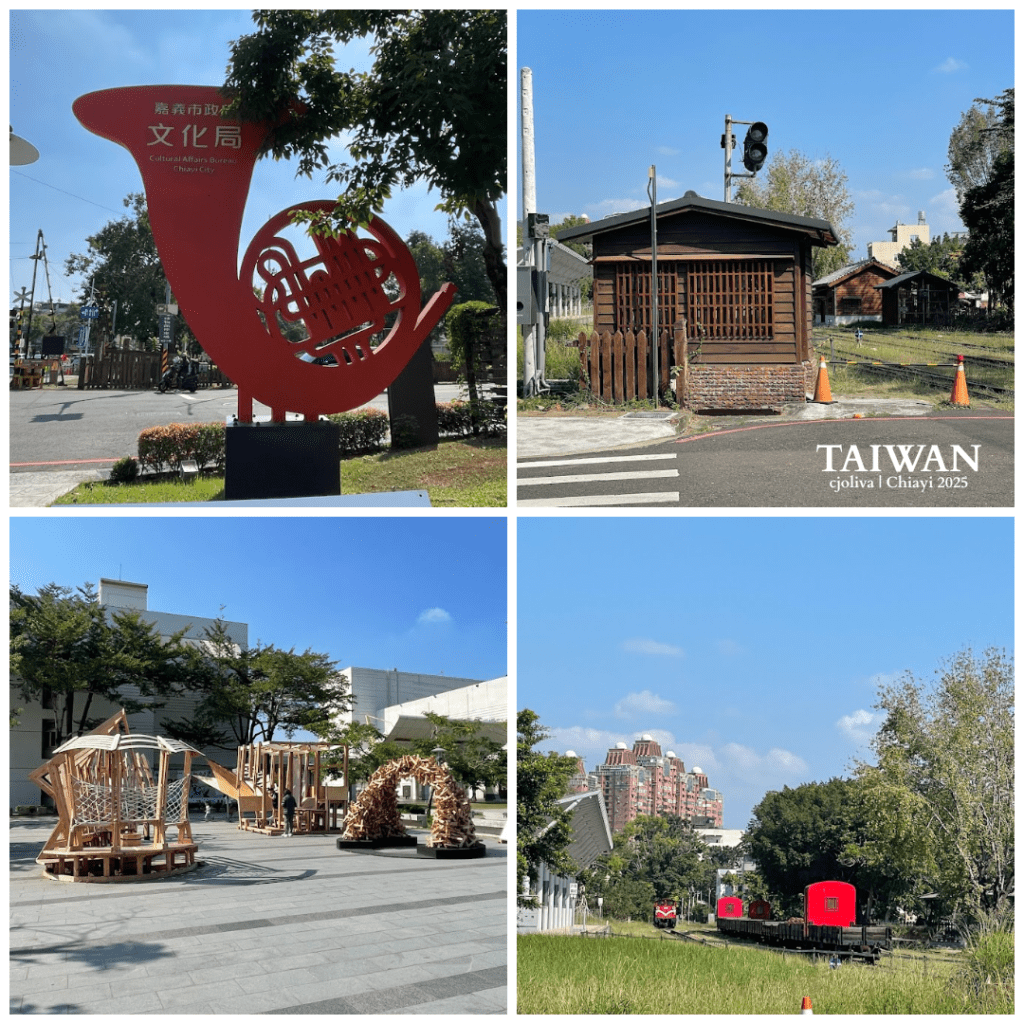
I hadn’t planned on spending hours in Chiayi’s historic center. Like most travelers passing through south-central Taiwan, Chiayi was originally just a stepping stone for me, a necessary pitstop before heading up into the misty, high-altitude cedar forests of Alishan. But wandering off course led me right into this peaceful, aromatic pocket of history preserved right in the middle of the city.
Under the scorching midday sun, the bus dropped me off near the Cultural Affairs Bureau. A few unique displays greeted me along the way, making me smile despite the heat. I followed the path toward Hinoki Village, Chiayi, Taiwan, where the atmosphere shifted instantly.
First Impressions of Hinoki Village 🏯
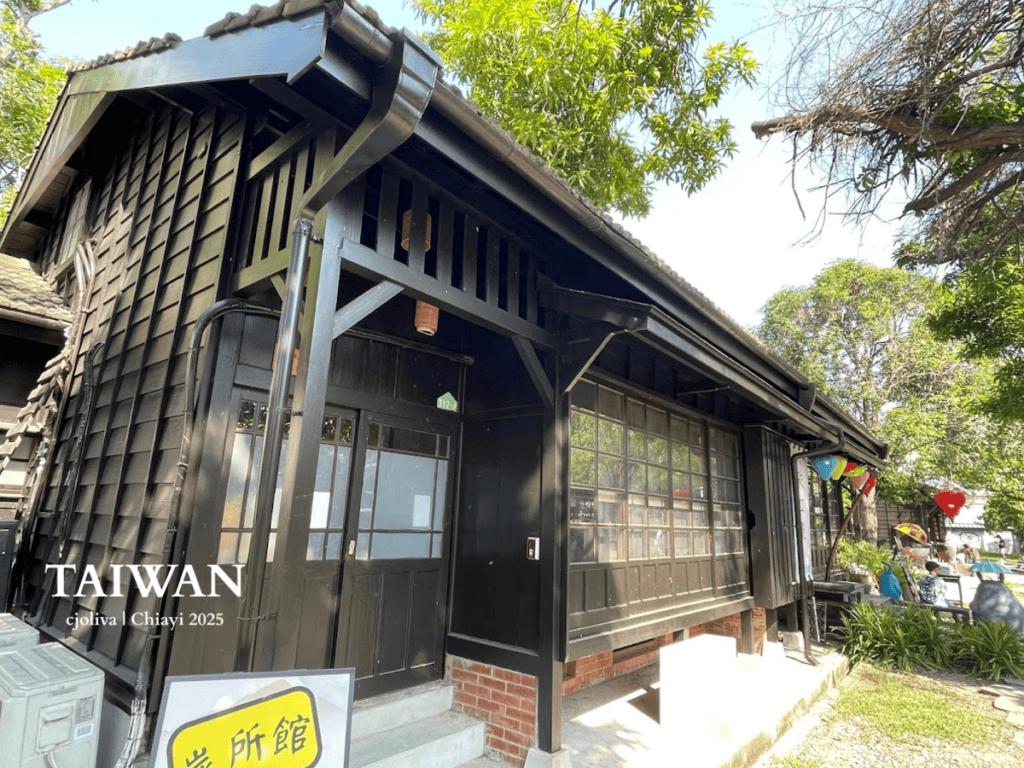
Hinoki Village unfolded like a postcard: clusters of Japanese-style wooden houses, their dark beams glowing in the afternoon light. Some had been transformed into ice cream shops, souvenir stalls, and cozy cafés.
The scent of matcha and roasted sweet potatoes drifted through the air. I grabbed a quick bite, wandered through the lanes, and let the blend of Japanese heritage and Taiwanese charm sink in. It was charming in that quiet, simple way that Chiayi always manages to be.
Solo Travel Tip: The cypress dormitories offer natural shade and elevated walkways. Stepping under the deep wooden eaves is the best way to escape the intense Chiayi midday heat while wandering between shops.
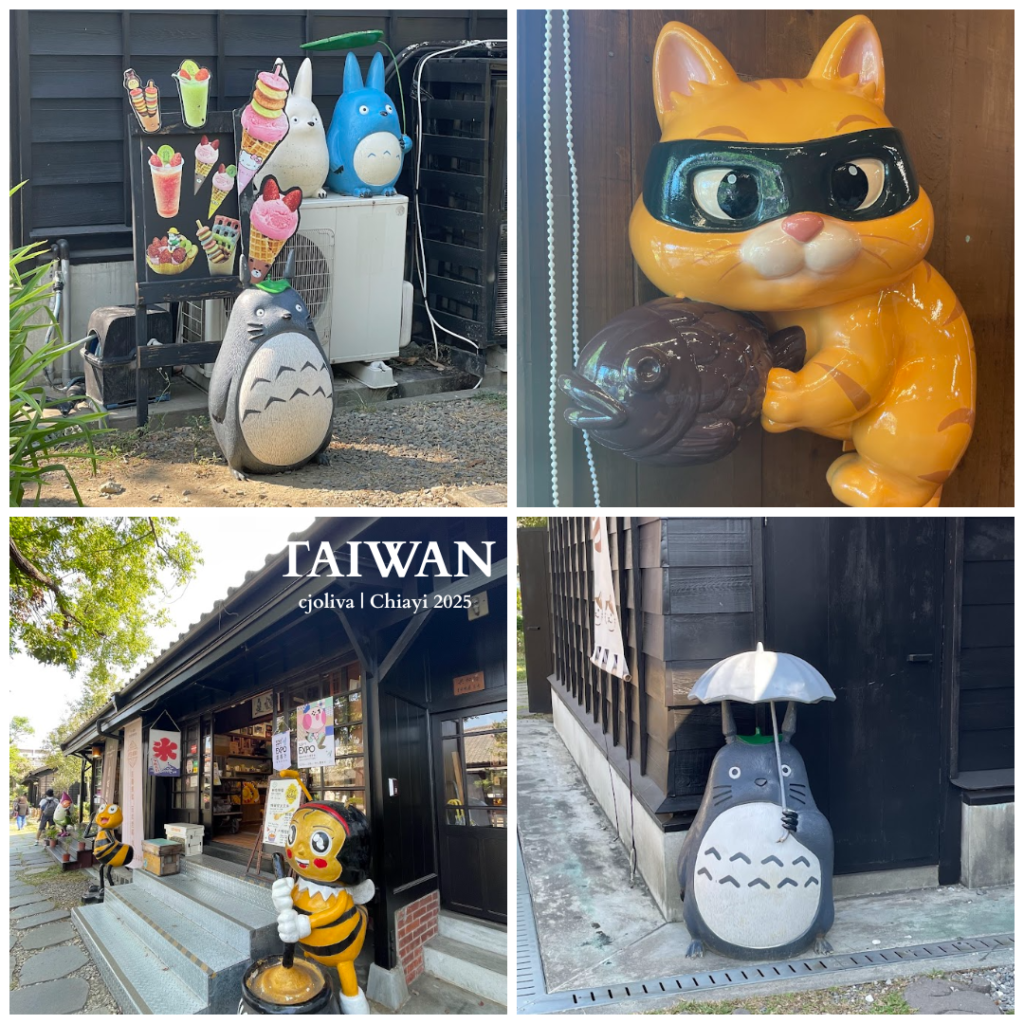
Walking Through Culture and Everyday Life 🎐
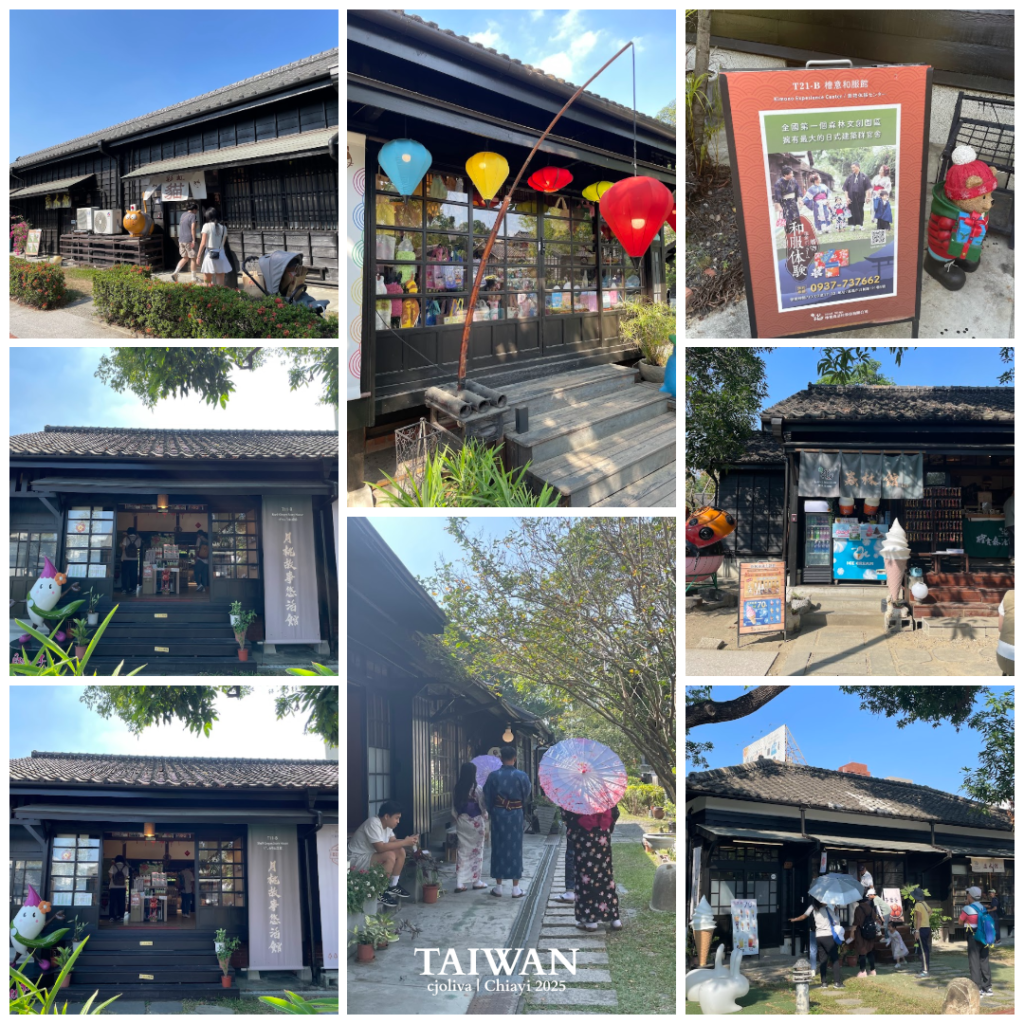
I saw people strolling leisurely—mostly locals—browsing trinkets, sipping cold drinks, and even dressing up in kimonos for photos. The mix of heritage architecture and playful modern touches gave Hinoki Village, Chiayi, Taiwan, a charm that felt both nostalgic and alive.
A Glimpse into History 🏡
Originally built during the Japanese colonial era as dormitories for forestry workers, the site has been carefully restored into Taiwan’s largest cluster of Japanese-style wooden houses. Over thirty structures stand across 3.4 hectares, their hinoki cypress beams glowing warmly under the sunlight.
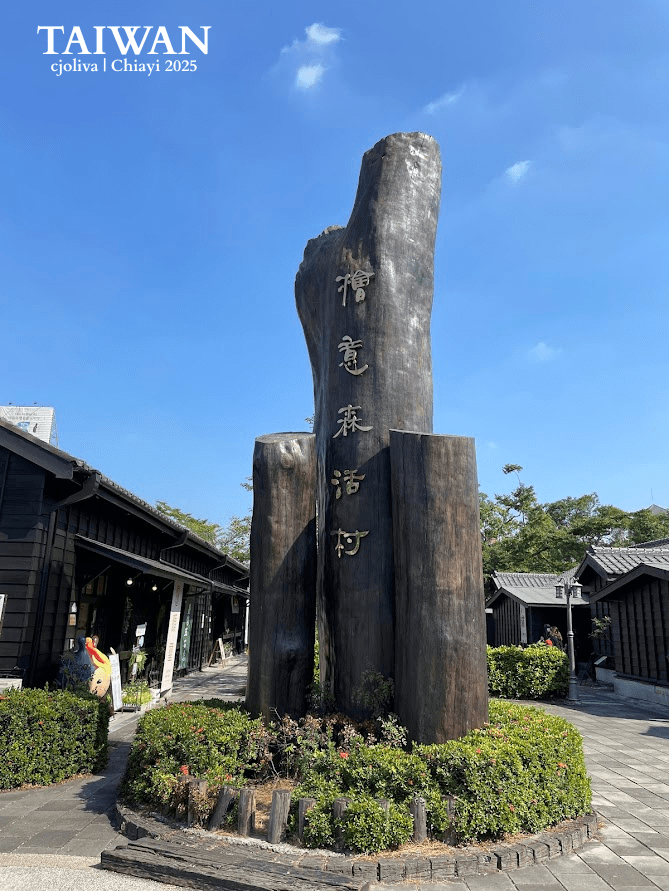
Historical Note: Hinoki refers to Formosan red cypress wood, prized for its natural water resistance and rich aroma. These 28 original dormitories were constructed using traditional Japanese joinery (subako) without using a single metal nail.
A Sweet Pit Stop: Catching the “Thief Cat” at Building T21B 🐾
Driven purely by hunger, I followed the scent of warm batter right into Cat Patrol Burn Shop/Mao Xun Shao Ben Pu (貓巡燒本舖). It wasn’t until I looked around the room that I noticed the shop’s adorable backstory: a ginger cat wearing a black bandit mask caught red-handed stealing a fish cake on the wall, with a Calico Cat Police Officer on guard to keep order.
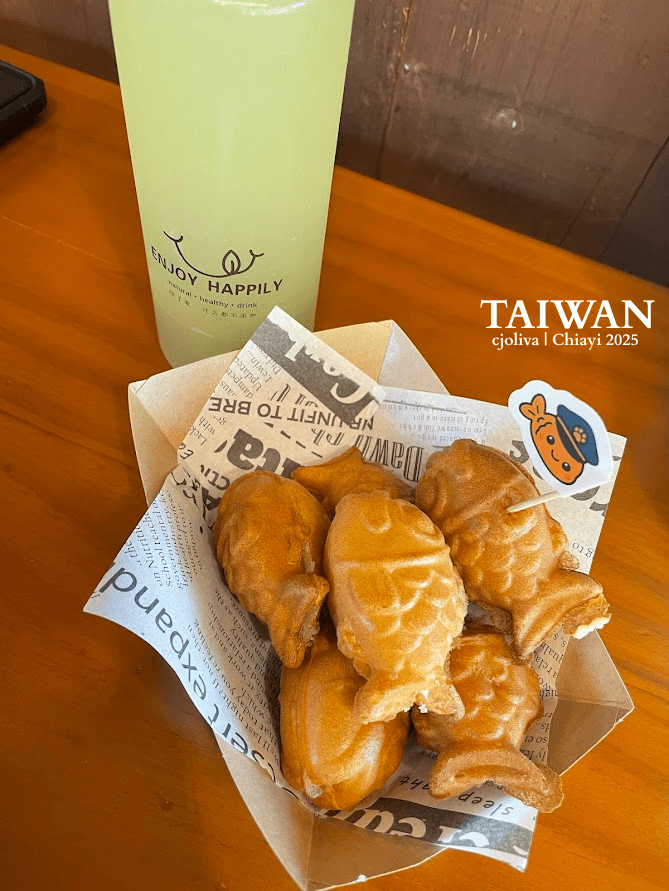
I ordered a batch of their freshly baked mini fish-shaped cakes (taiyaki/bungee-ppang) along with an iced fresh kumquat lemon tea. Sitting inside the cool wooden dormitory, sipping my citrus drink while surrounded by whimsical cat art, was exactly the midday reset I needed.
Official Shop Details:
- Shop Name: Mao Xun Shao Ben Pu (貓巡燒本舖) / Neko Patrol
- Building Location: T21B (The historic former police dormitory building)
- Official Web Page: Hinoki Village – T21B Shop Profile
- Must-Try: Mini fish cakes (taiyaki / bungeo-ppang in Original, Chocolate, or Matcha) paired with Fresh Kumquat Lemon Tea (鮮桔檸檬)
Mandarin 101: Decoding “Cat Patrol Burn Shop” 🐱✨
Ever wonder how Google Translate gets “Cat Patrol Burn Shop” from 貓巡燒本舖? Here is the character-by-character breakdown:
- 🐱 貓 (Māo): Cat / Neko
- 🚨 巡 (Xún): Patrol (a nod to the Calico Police Cat on duty!)
- 🐟 燒 (Shāo): “Burn” or Roast/Bake (referencing freshly baked treats like taiyaki or bungeo-ppang)
- 🏪 本舖 (Běn Pù): Main Store / Flagship Shop
Rounding Out the Detour: Back to Chiayi TRA Station 🚌
After finishing my lemonade and wandering through the remaining shaded lanes, it was time to move on. I walked back toward the main road and caught a local bus right back to Chiayi TRA Station.
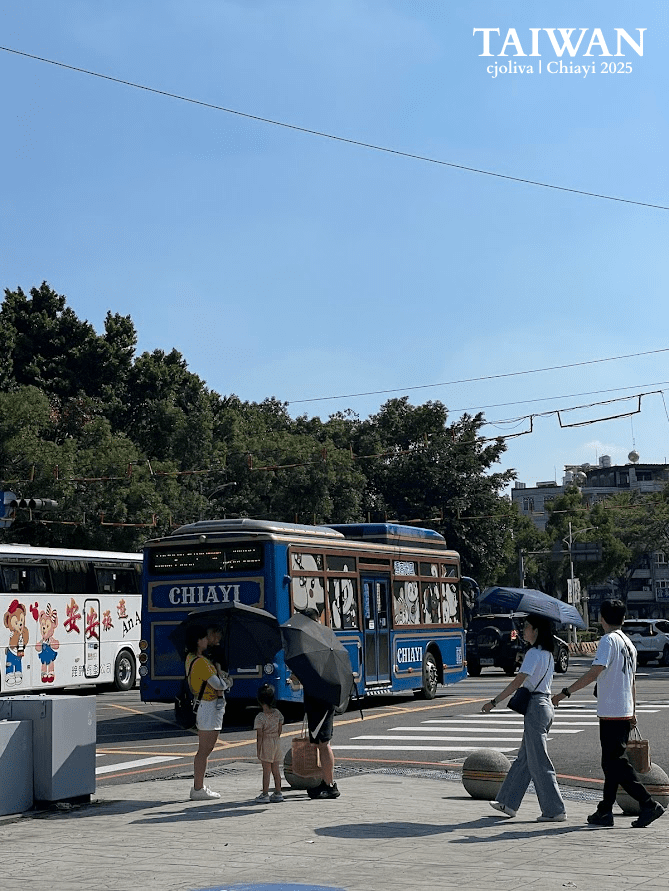
What started as an unplanned impulse triggered by a passing view from the Alishan train ended up being one of the most delightful stops of my journey. Hinoki Village was the perfect reminder of why leaving room for spontaneous detours is always worth it.
What I truly admire about Taiwan is how they preserve their historic places and breathe new life into them. Hinoki Village is the perfect example. Instead of letting old structures fade with time, they transform them into cultural spaces, honoring the past while creating something meaningful for the present.
Next Up: Kaohsiung, Taiwan | Day 1: Kaohsiung Train Travel, TRA Rail Tips & Night Breezes—a journey south through Taiwan’s changing landscapes, practical tips for navigating the local rail system on a budget, and how to spend a relaxing evening soaking in Kaohsiung’s coastal air. Stay tuned!
This entry belongs to my Taiwan, Two, Three… (2025 Series). Some journeys don’t just take you forward—they bring you back to yourself. Here’s to Chiayi mornings, a Meteor Garden pilgrimage, and the quiet strength of traveling solo. ✨🇹🇼
📅 Travel Dates: November 14–18, 2025